VideaHealth: The AI That Charts Your Teeth Automatically

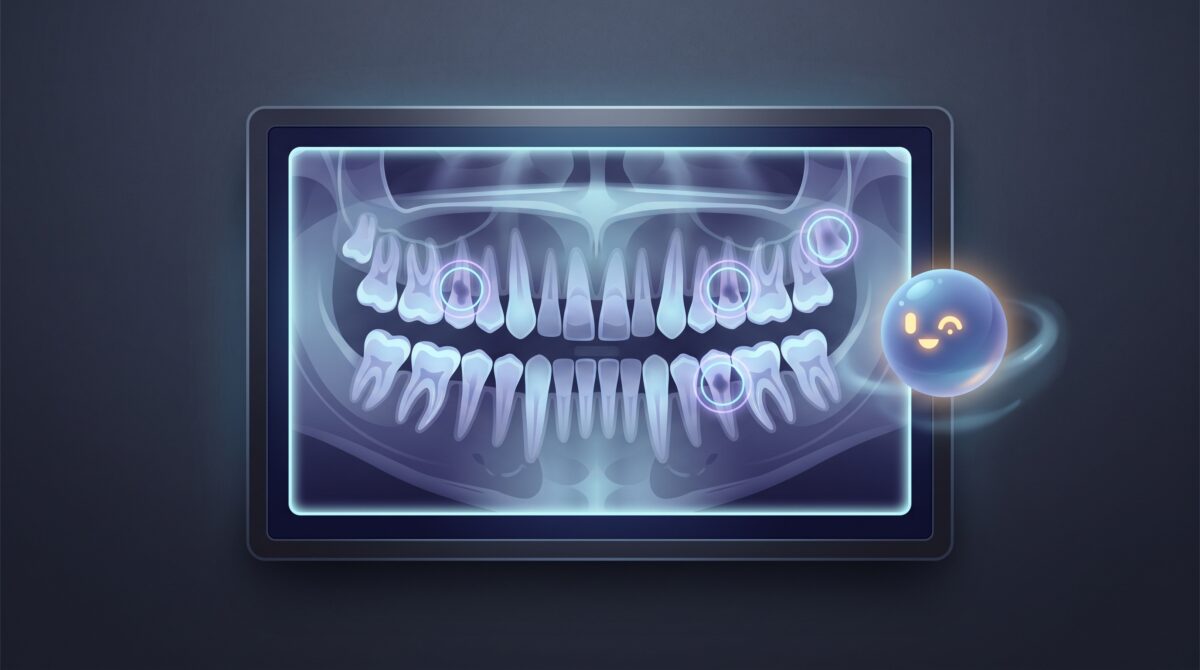
You sit down in the chair, they take a couple of X-rays, and a moment later your dentist is pointing at a screen: “See that? Let’s keep an eye on it.” Increasingly, the first thing to spot “that” isn’t a human at all — it’s an AI called VideaHealth, quietly reading your X-ray the instant it’s captured and drawing a little outline around anything that looks off. No new gadget, no separate app. Just a second, tireless set of eyes built right into the software your dentist already uses.
VideaHealth (the product is often just called Videa) is one of the most widely deployed dental AI tools in North America, and it’s a good one to understand — because it’s probably reading X-rays in a practice near you already. Here’s what it actually does, whether it works, and what it means for you as a patient.
What VideaHealth Actually Does
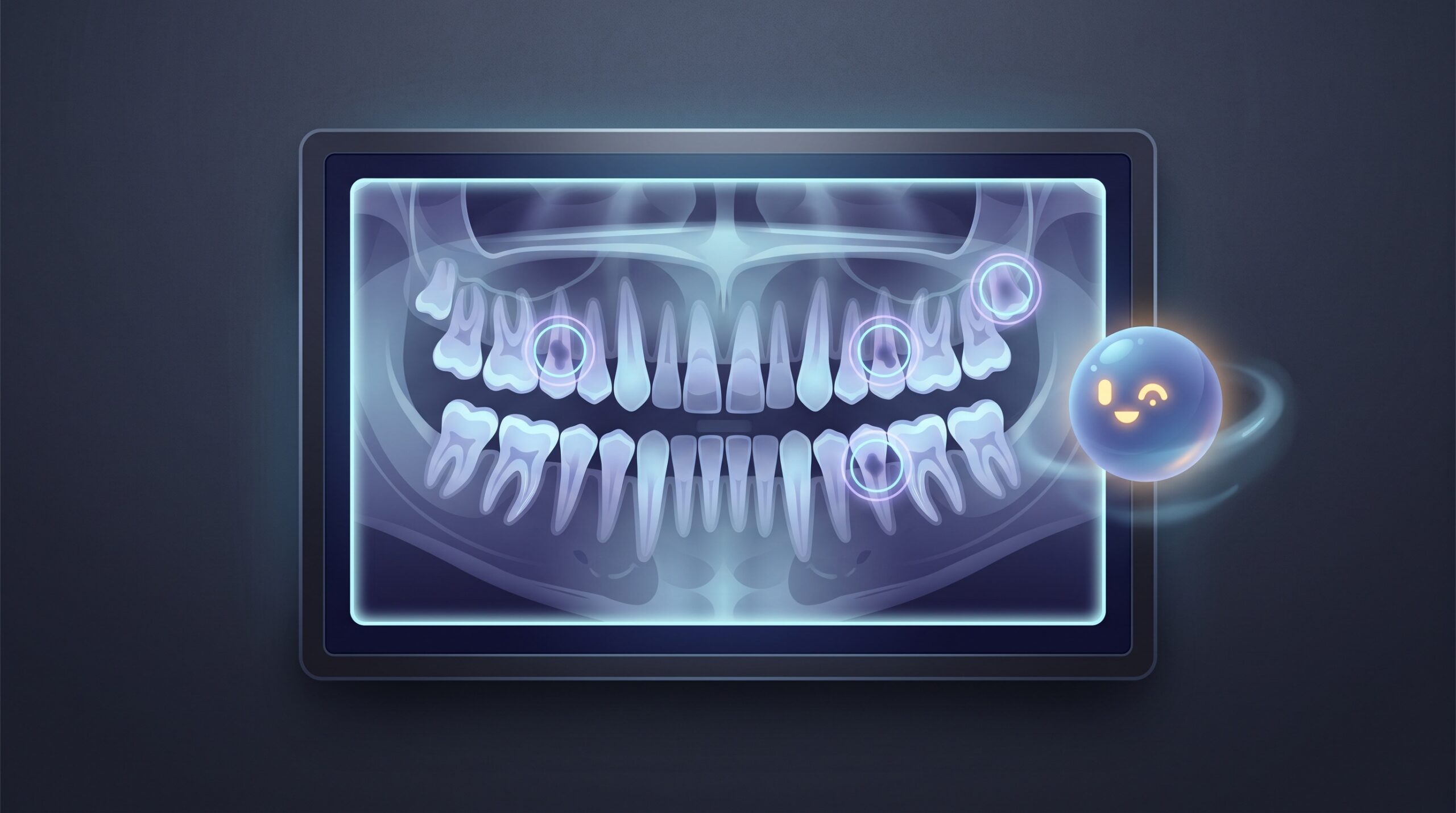
At its core, VideaHealth is an image-analysis AI. The moment a dental X-ray is taken, the system scans it and highlights areas that may indicate a problem — most famously caries (that’s the clinical word for cavities), but also things like bone loss, calculus (hardened tartar), and other common findings. It draws boxes or outlines on the image so a human can see exactly where the AI is pointing.
The “charts your teeth” part is the useful bit: instead of the dentist eyeballing a grainy image and mentally logging every suspicious spot, the AI surfaces candidates automatically and consistently. It doesn’t get tired, distracted, or rushed on a busy Friday afternoon. Think of it less as a robot dentist and more as a spell-checker for X-rays — it flags, a person judges.
Is It FDA-Cleared? Yes — Twice Over
This matters, so let’s be precise. VideaHealth isn’t a science project; it’s regulated medical software. It first earned FDA 510(k) clearance in May 2022 for Videa Caries Assist, its cavity-detection algorithm. Then in January 2024 it received a broader clearance for its full platform (marketed as Videa Dental Assist), which the company says spans more than 30 AI algorithms covering most of the common dental diseases — a much wider net than cavities alone.
A 510(k) clearance means the FDA has reviewed the tool and agreed it’s substantially equivalent to something already trusted on the market. It’s the same regulatory lane most dental AI runs in — the kind of due diligence we walked through when we looked at Pearl’s Second Opinion, another chairside AI that reads your X-rays. Clearance isn’t a promise of perfection, but it’s a real bar, and VideaHealth has cleared it more than once.
Does It Actually Catch More?
The whole pitch rests on one question: does a second AI reader help a human find things they’d otherwise miss? The evidence VideaHealth points to is encouraging. In the data behind its cavity tool, the company reported that dentists using the AI reduced missed cavities by about 43% compared to reading X-rays unaided.
That number deserves a little context. “Missed cavities” doesn’t mean dentists are bad at their jobs — early caries are genuinely hard to see, they hide between teeth and in shadows, and two skilled clinicians will honestly disagree on the same image. An AI that never blinks and applies the exact same standard to every X-ray is a natural complement to a human eye that’s read forty images already today. The upside isn’t just catching more; it’s catching things earlier, when a small filling beats a root canal.
The Clever Part: It Lives Inside Software You Already Use
Here’s where VideaHealth is genuinely smart, and it’s the reason it’s spread so fast. A lot of AI tools ask you to export your images, upload them somewhere, and check a separate dashboard. Videa doesn’t. It’s embedded directly into the practice’s existing software — most notably as “Detect AI, powered by VideaHealth” built natively into Dentrix and Dentrix Ascend, two of the most common dental practice-management systems in the U.S. and Canada.
What that means in plain terms: the dentist doesn’t leave their normal screen. The X-ray comes up in the patient’s chart exactly as it always has, but now it arrives with the AI’s findings already drawn on. VideaHealth says it integrates with the large majority of imaging and practice-management systems and that setup can take just a few minutes. That frictionless “it’s just there” experience is a big reason clinics adopt it — no workflow to relearn. It’s the same embedded-not-bolted-on philosophy that’s reshaping the whole category, which we mapped out in our field guide to the state of AI in dentistry.
What This Means for You in the Chair
As a patient, you’ll rarely see VideaHealth by name — but you may feel its effects. The most visible one is better explanations. When there’s an AI outline drawn right on your X-ray, a good dentist can turn the screen toward you and show you the exact spot rather than describing it. That transparency tends to build trust: you’re seeing the same evidence they are.
The honest flip side is worth naming too. Because the AI is tuned to catch things, it can flag areas that turn out to be nothing — and a highlighted box is not the same as a diagnosis or a recommendation to drill. The tool is assistive, not autonomous: it’s designed to support a dentist’s judgment, not replace it. If you’re ever unsure why something’s being recommended, it’s completely fair to ask, “Is that the AI flagging it, and what do you think?” A confident clinician will welcome the question.
How It Fits the Bigger Picture
VideaHealth is part of a fast-moving pack. Its closest rivals — Overjet, which pairs imaging with the insurance side, and Pearl, the other big chairside detector — are chasing the same goal from slightly different angles. VideaHealth’s edge is breadth of embedded distribution: by wiring itself deep into Dentrix and dozens of imaging systems, it’s become the AI many dentists encounter by default rather than by choice.
That’s the real story of dental AI in 2026. It isn’t a futuristic robot in the corner of the room; it’s a quiet layer of intelligence folded into tools that already existed, catching the small stuff earlier and giving your dentist — and you — a clearer picture. The best version of this technology is the kind you barely notice, right up until it finds the thing that would’ve cost you a molar. That’s AI doing exactly what it should: amplifying a skilled human, not pretending to be one.
Sources & further reading:
- VideaHealth Dental AI Solution Receives FDA 510(k) Clearance
- Videa Receives FDA Clearance for Comprehensive Dental AI Platform
- Dentrix — Enhanced Diagnostic Accuracy with FDA-Cleared AI (Detect AI powered by VideaHealth)
Related Reading
- The State of AI in Dentistry 2026: A Field Guide to the Tools
- Denti.AI: Voice-Enabled Charting, Perio, and the AI Scribe
- DentalMonitoring: AI That Follows Ortho Cases From Home