Hikers Followed Gemini Up a Mountain and Had to Be Rescued: How to Use AI for Real-World Plans Without Getting Burned


Here’s a story that sounds like a joke until you get to the part where rangers had to go find people in the dark. Three hikers set out to climb California’s Mount Shasta — a 14,000-foot glaciated peak, not a nature walk — after using Google’s Gemini to help plan the trip. They ended up stranded overnight and had to be rescued off the mountain the next morning. And according to the local sheriff’s office, the AI’s advice was part of how they got there.
It’s easy to laugh and move on. Don’t. This is one of the cleanest real-world illustrations you’ll get of a habit almost everyone now has: asking an AI to plan something that matters, and quietly trusting the answer. So let’s look at exactly what went wrong, why AI does this, and — the useful part — how to keep the convenience without ending up as someone else’s cautionary tale.
What actually happened on Mount Shasta
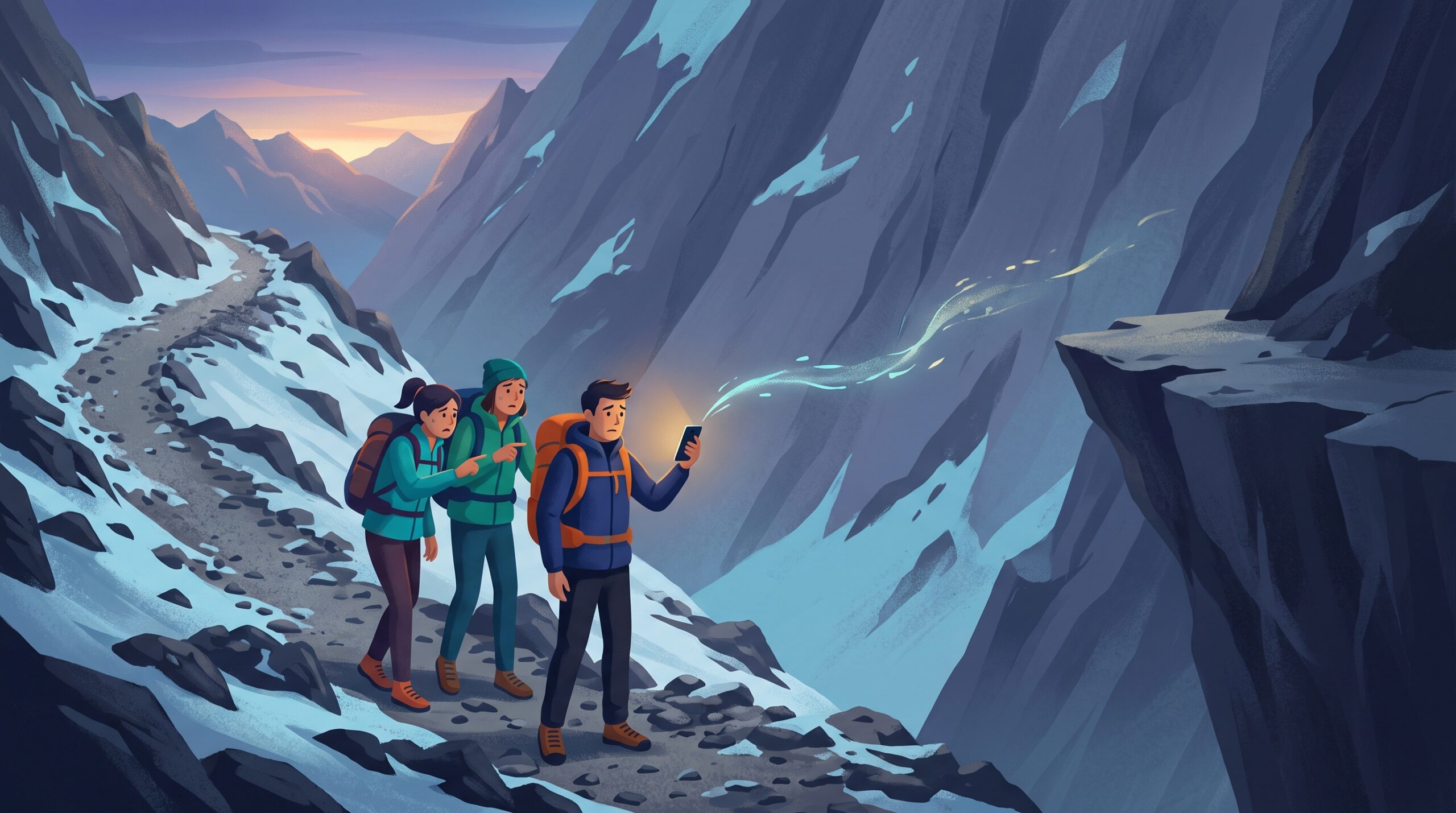
Per a report from the Siskiyou County Sheriff’s Office, the trio started their hike at 3am. There’s a well-known rule on big mountains: if you haven’t summited by around noon, you turn around, because afternoon weather and darkness are how people die up there. They reached the top at 7pm — seven hours past the turnaround time — then tried to descend in the dark, called the sheriff’s office for directions, and spent the night in Mud Creek Canyon before Forest Service rangers and volunteers brought them out the next day.
The AI’s specific contribution, according to the sheriff’s office: the hikers “were advised by Gemini to bring far less food and water than their group required, especially when their planned 8-hour ascent became a multiday ordeal.” Now, plenty of human decisions went wrong here too — no AI forced them to push for the summit at 7pm. But the underpacking is the tell. They asked a machine how much to bring, it gave a confident number, and the number was dangerously low. The sheriff’s own takeaway is worth quoting: call the local ranger station ahead of your trip, and “never rely solely on AI for your trip planning.”
Why AI sounds so sure and gets it so wrong
This is the part everyone needs to internalize, because it’s not a Gemini problem — it’s how all these tools work. A large language model is a spectacularly good predictor of plausible-sounding text. Ask it how much water to bring for an eight-hour hike and it will produce a fluent, reasonable-sounding answer drawn from patterns in its training data. What it is not doing is checking a real map, your real fitness, the real elevation gain, the actual weather, or the fact that “8 hours” on Shasta is optimistic for beginners.
The result is a very specific failure mode: confidently wrong. The answer has no wobble in its voice, no visible uncertainty, no “I’m not sure.” That confidence is the trap, because humans read confidence as competence. If you want the deeper mechanics of when an AI is actually looking real information up versus just generating from memory, we broke that down in this explainer on how AI assistants retrieve facts — and the short version is that most casual chatbot answers are the second kind. Fluent. Ungrounded. Occasionally, on a mountain, deadly.

The tasks where blindly trusting AI is genuinely risky
Not every AI mistake matters. If it botches a dinner-recipe substitution, you eat something slightly worse. The problem is that we use the same casual trust for questions where being wrong has real consequences. A quick way to think about it: the risk isn’t how likely the AI is to be wrong — it’s how bad it is when it is. Be especially careful when the stakes are physical, medical, legal, or financial:
- Anything with physical safety: hiking, backcountry travel, dosages, driving routes through remote or dangerous areas, DIY electrical or gas work. If a wrong answer can hurt you, verify it.
- Medical questions: AI is a fine tool for understanding terms and preparing questions, and a terrible substitute for a clinician making a call about your body.
- Legal and financial decisions: AI will happily state a “fact” about your local laws, tax situation, or a contract that is subtly — or completely — wrong.
- Anything time- or logistics-critical: flight connections, visa rules, opening hours, whether that trailhead is even open this season.
The pattern across all of these is the same: the AI doesn’t know what it doesn’t know, and it won’t warn you when it’s guessing.

How to use AI for planning without getting burned
None of this means don’t use AI to plan things — it’s genuinely great at it. It means use it like a smart, fast, occasionally-overconfident intern, not an oracle. Here’s the checklist:
- Treat every answer as a first draft, not a final answer. Let the AI produce the plan, the packing list, the itinerary — then verify the load-bearing parts against a source that can’t hallucinate.
- Anchor to an authoritative source for anything high-stakes. For the Shasta hikers, that was one phone call to the ranger station. For travel, it’s the airline or the official park site. For health, it’s a professional. Ask the AI what to check, then go check it.
- Ask it to show uncertainty. Prompt with “flag anything you’re not confident about and tell me what I should independently verify.” It won’t be perfect, but it surfaces the shaky bits far better than a plain question does.
- Give it real constraints. “How much water for a hike” gets a generic guess. “How much water for three beginners, 11 miles round trip, 7,000 feet of gain, exposed sun, no water sources on route” gets something far more useful — the same discipline behind the everyday prompts that actually save you time. Specificity is safety.
- Cross-check across tools for the important stuff. If two independent sources agree, your confidence goes up. If Gemini and an official site disagree, trust the official site and dig into why.
If you lean on Gemini specifically, it’s worth knowing its genuine strengths and limits — our guide to Google’s Gemini and Search tools covers where it shines (summarizing, explaining, drafting) versus where you should never take it at its word.

Frequently asked questions
Did Gemini cause the hikers to get stranded? Not by itself. Several human decisions went wrong — most obviously summiting at 7pm, seven hours past the safe turnaround time. But the sheriff’s office says Gemini advised them to pack far less food and water than they needed, which turned a bad situation dangerous. AI was a contributing factor, not the sole villain.
Is it safe to use AI to plan trips at all? Yes — for brainstorming routes, building itineraries, and drafting packing lists it’s excellent. The mistake is treating its output as verified fact for anything involving your safety. Use it to plan, then confirm the critical details with an authoritative source.
Why does AI give confident answers that are wrong? Language models generate the most plausible-sounding response based on patterns in their training data, not by checking reality. They have no built-in sense of when they’re guessing, so a wrong answer arrives with exactly the same confidence as a right one.
What’s the single most important habit? For anything where being wrong could hurt you or cost you, verify the AI’s key claims against a source that can’t hallucinate — an official website, a professional, or a phone call. AI is the first draft; ground truth is the final check.

The takeaway
The Mount Shasta rescue isn’t a story about a bad AI — Gemini is a genuinely capable tool, and it’ll plan your next weekend beautifully. It’s a story about a very human shortcut: mistaking a confident answer for a correct one. AI is the best planning co-pilot most of us have ever had, and it will absolutely make you faster and more prepared. It just can’t be the last word on anything that can hurt you. Let it draft the plan, then do the one thing the machine can’t: check it against the real world before you bet on it. Use it that way and you get all the upside — and you stay off the evening news.
Sources & further reading:
- Hikers rescued after using Google Gemini for planning (TechCrunch)
- 3 hikers who say they used AI to plan trip rescued after becoming stranded on Mount Shasta (ABC News)
Related Reading
- The AI Industry Just Called for a Slowdown on Itself: What ‘Pacing the Frontier’ Means for You
- Gemini 4 Argon Is Here: What Google’s New Flagship AI Can Actually Do for You
- Gemini Spark: Google’s New 24/7 Personal AI Agent — What It Does and How to Use It