Gemini 4 Argon Is Here: What Google’s New Flagship AI Can Actually Do for You

Google finally shipped the big one. After months of delays, Gemini 4 Argon — the company’s new flagship AI model — went broadly available on October 13, 2026, and Google is pitching it as its “most performant model yet.” Translation for the rest of us: it’s faster at hard reasoning, it can actually go off and do things, and it has a memory big enough to swallow an entire book in one go.
But a new model launch is always buried under benchmark charts and launch-day hype. So let’s skip that and get to the part that matters: what can Gemini 4 Argon actually do for you this week?
First, what Gemini 4 Argon actually is
Argon is a reasoning model. That’s the category of AI built to slow down and think through multi-step problems — complex software engineering, math and science, and the kind of “plan it out, then execute” work that trips up quick-answer chatbots. It’s multimodal too, so it handles text, images, audio, and video in the same conversation.
If you’ve used Gemini lately, this isn’t your first glimpse of Google’s push toward AI that acts on your behalf. We’ve already seen Google’s 24/7 Gemini Spark agent and the ability to teach Gemini your own repeatable workflows. Argon is the engine that makes all of that smarter and more reliable.
The headline feature: Tasks mode
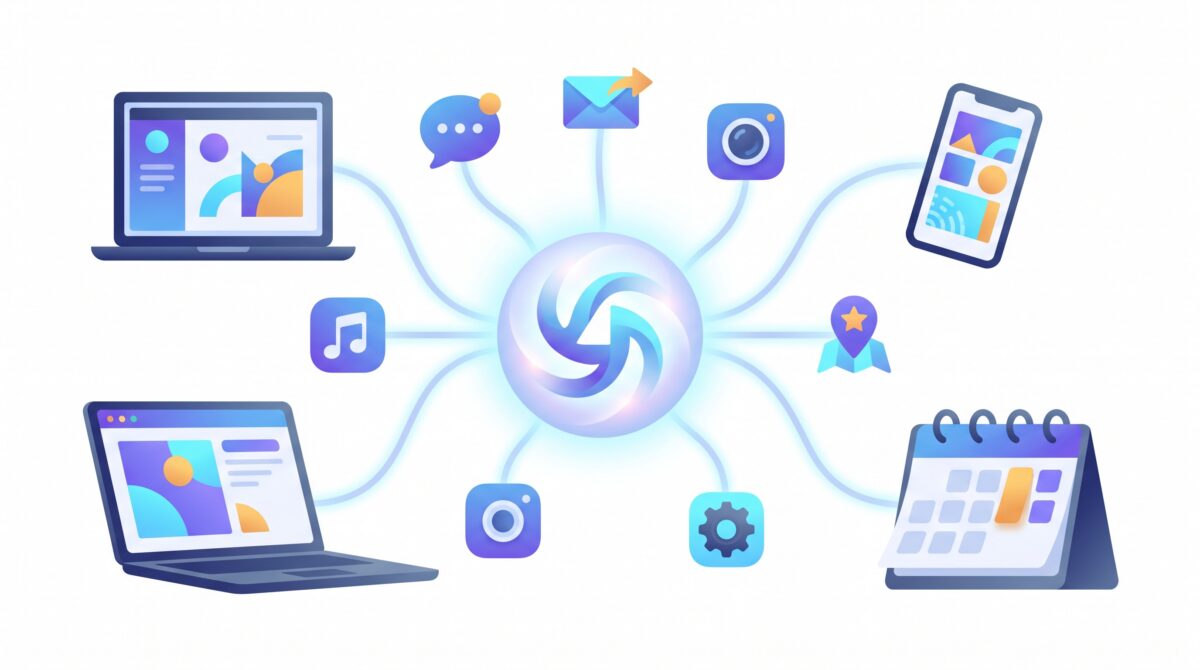
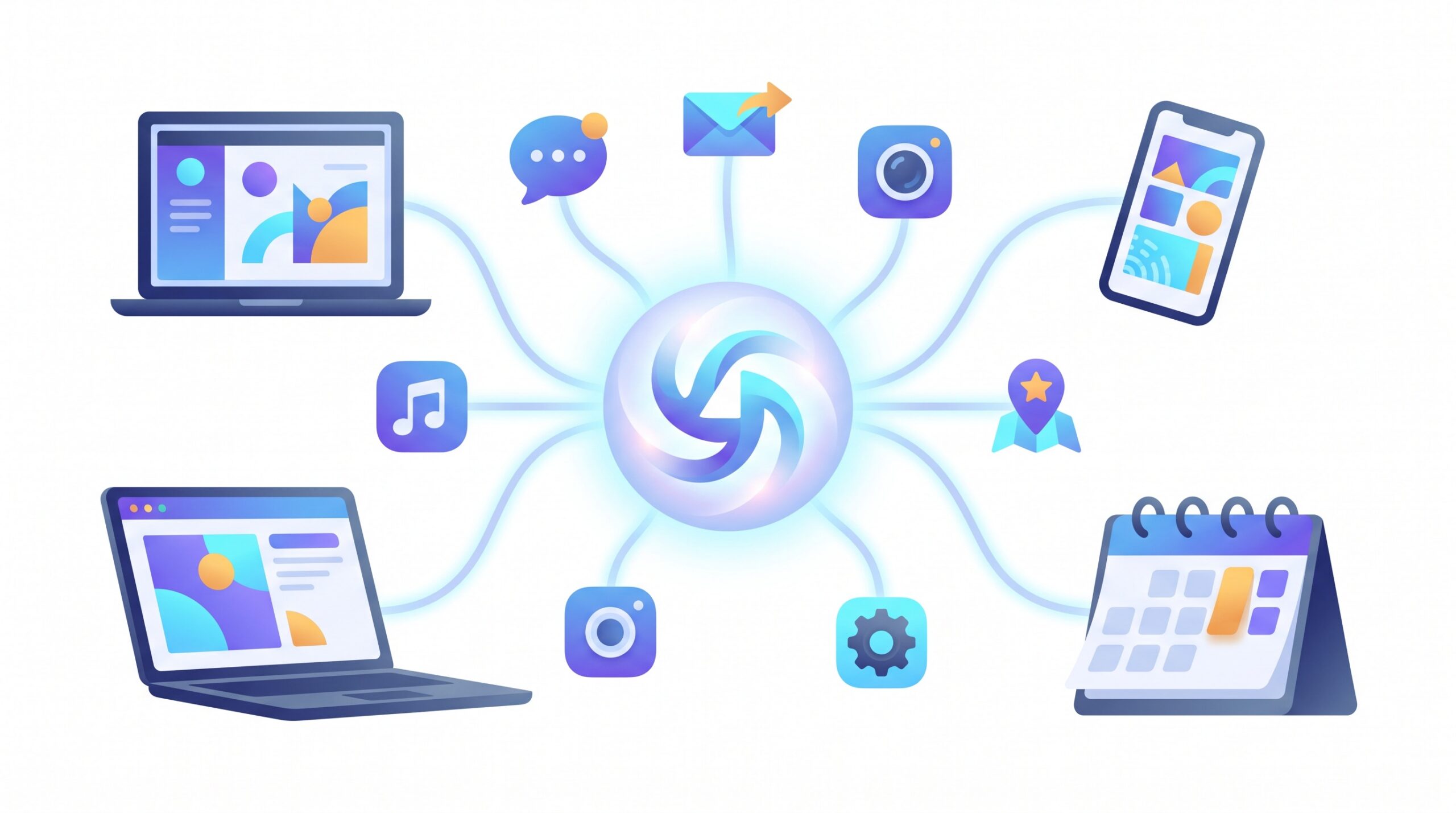
This is the one to pay attention to. Gemini now has a dedicated Tasks mode that lets Argon run jobs in the background through connected apps — both Google’s own services and third parties. Google says it supports more than 40 services at launch, including Adobe, Shopify, Instacart, and OpenTable.
Here’s what that looks like in practice. Instead of “write me a grocery list,” you can say “plan a dinner party for six on Saturday, build the shopping cart, and book a backup table in case I run out of time.” Argon can chip away at those steps across the connected apps while you get on with your day, then report back. It’s the difference between an assistant that suggests and one that handles it.

A word of realism: hand any AI agent the keys to your shopping and calendar and you’ll want to watch it closely at first. Check what it did before you trust it to run unsupervised — the same caution you’d give a brand-new human assistant.
A one-million-token memory — and why you’ll feel it
Argon has a one-million-token context window. Tokens are chunks of text (roughly ¾ of a word each), so a million of them is enormous — think a full-length book, a sprawling codebase, or hours of meeting transcripts, all held in mind at once.
Why should you care? Because the single most frustrating thing about older chatbots is that they forget. Paste a long contract and they lose the opening clause by the end. With Argon you can drop in the whole document and ask questions that span all of it — “does anything in the back half contradict the payment terms on page two?” Output can run long too: up to about 65,000 tokens by default, and far more in a special long-output mode, which matters when you want a full draft rather than a teaser.

For coders: Antigravity and the macOS app
If you write software, the Mac version is worth a look. Gemini for macOS now includes Google’s Antigravity programming interface, built for agent-style coding where the AI prepares larger chunks of working code rather than one line at a time. Google reports that using Argon internally in Antigravity increased the amount of code its agents prepared by more than 35%.
That said, more code produced is not the same as more good code shipped — you still review everything. And if you’re paying per use, a powerful model can quietly run up a bill; it’s often smart to remember that the cheaper, faster model is frequently the smarter pick for simple tasks, and save Argon for the genuinely hard ones.
Is it actually the best? The honest answer
Google compares Argon to OpenAI’s GPT-6 (“Astra”) and Anthropic’s Claude Opus on coding and cybersecurity benchmarks — and this is where you should keep a cool head. Those results are self-reported, and even in Google’s own numbers Argon trailed on two of the four coding benchmarks. It’s a genuine top-tier model that trades wins with its rivals, not a runaway leader.

The practical takeaway: there is no single “best AI” anymore. The frontier models from Google, OpenAI, and Anthropic are now close enough that the right choice depends on your task, your existing apps, and your budget — much like the trade-offs we dug into when OpenAI’s GPT-6 learned to build tools mid-conversation. If you live in Google’s ecosystem, Argon’s Tasks integrations are a real advantage. If you don’t, the gap in raw smarts probably won’t decide it for you.
One more reassuring note: Google says it hardened Argon against prompt-injection attacks (the trick where hidden instructions hijack an AI), cutting the success rate of indirect attacks to 0.7%, with a real-time system watching the model’s reasoning for rule-breaking. That matters a lot once an AI can act in your apps.
How to try it — and what it costs
Gemini 4 Argon is live in the Gemini app and in AI Mode in Search for AI Pro and Ultra subscribers, and it’s available to builders through the Gemini API and Google AI Studio. If you already pay for Gemini, it may already be your default — just look for the Argon or “4” label in the model picker.
For developers, there’s an introductory price: about $2 per million input tokens and $10 per million output tokens through November 30, after which it roughly doubles to $4 and $20. If you want to experiment cheaply, now is the window.

The real story of Argon isn’t the leaderboard — it’s the quiet shift from AI that answers to AI that acts. A model that can hold a book in mind and quietly run a four-step errand across your apps is a genuinely different kind of tool. Start with one small, low-stakes task, watch what it does, and let it earn your trust. Used well, it’s less about replacing you and more about handing off the busywork so you can spend your attention where it actually counts.
Sources & further reading:
- Google announces Gemini 4 flagship AI model after months of delays — Khaleej Times
- Gemini 4 Argon — Google AI for Developers documentation
- Google Gemini 4 Argon launches — Mezha
Related Reading
- Gemini Spark: Google’s New 24/7 Personal AI Agent — What It Does and How to Use It
- Google Gemini 3.1 Pro: The AI Game-Changer with 1 Million Token Context Window
- Your Phone Is About to Do Your Chores: What Android’s New AI Agents Actually Do