Anthropic’s FlashProve Wants to Prove Which AI Model Actually Answered You — Here’s Why That Matters


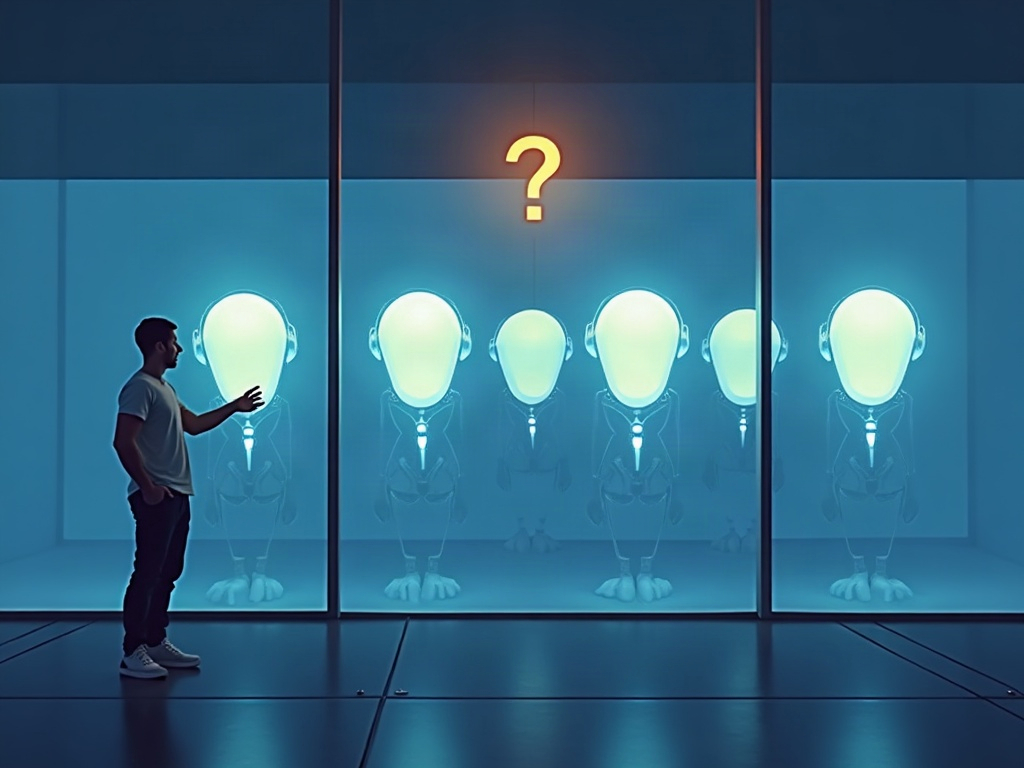
Here’s a question you’ve probably never thought to ask: when a chatbot or an app tells you it’s “powered by” some top-tier AI model, how do you actually know that’s what answered you? The honest truth is that you don’t. From the outside, every model looks the same — you send text in, you get text back, and you take the label on faith.
On November 3, 2026, Anthropic published a research project aimed squarely at that blind spot. It’s called FlashProve, and its goal is to let anyone cryptographically prove which AI model produced a given answer — without ever needing to see inside the model. It’s open-source, it’s genuinely clever, and it comes with one enormous catch. Here’s what it does and why it could end up mattering to you.

The problem FlashProve is trying to solve
Think about how much you now take on trust. A customer-service bot claims it runs on a flagship model. A “GPT-powered” writing app promises the good stuff. An AI agent fires off a decision on your behalf. In every case, you’re trusting a label you can’t check.
That matters more than it sounds, because there’s a real incentive to cut corners. Running the biggest, smartest models is expensive, so a provider under load could quietly route your request to a cheaper, smaller, or more heavily compressed model while still charging you — and advertising — the premium one. You’d rarely notice. The answer would just be a little worse, a little more generic, and you’d have no way to prove anything was swapped.
This is the same transparency itch the industry has been scratching from other angles. We’ve written about “AI nutrition labels” that help you read what a model is and pick one that’s good for you, and about Anthropic’s tools for proving your AI spend is actually worth it. FlashProve pushes that idea to its logical end: not just describing what you’re getting, but proving it.
How ‘provable inference’ works — in plain language
The core idea goes by the name provable inference, and you can understand it without a cryptography degree.
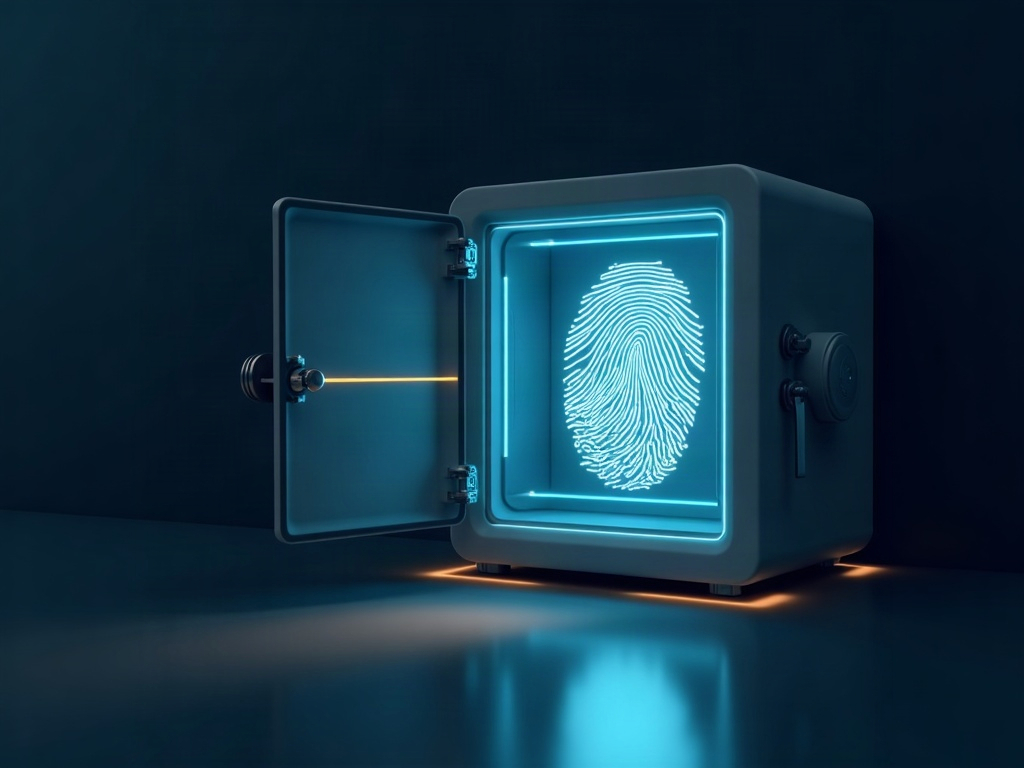
First, a model gets a fingerprint — a public identifier that uniquely corresponds to that specific model. Crucially, the fingerprint doesn’t expose the model’s weights (the valuable, secret internals the lab spent millions building). Think of it like a notary’s seal: it proves who signed something without revealing how the signature machine is built.
Then, whenever the model answers a prompt, FlashProve can generate a cryptographic proof that this exact output came from the model matching that fingerprint. The technique behind it is a mouthful — a zero-knowledge succinct non-interactive argument of knowledge, usually shortened to zkSNARK — but the useful part is what it lets you do. Anyone who holds three things — the published commitment, the prompt, and the response — can verify the proof themselves, confirming the answer genuinely came from that model. No access to the private weights, no trusting the provider’s word, just math that either checks out or doesn’t.
In other words: the lab keeps its secrets, and you still get certainty. That’s the elegant trick at the heart of it.
Why this could actually matter to you
Right now this sounds abstract, but the payoff is very human. Verifiable AI turns “trust me” into “check for yourself,” and that unlocks a lot of situations where the stakes are too high for faith alone.
Picture a hospital that’s only cleared a particular, carefully-tested model for reading scans, a law firm that must prove to a court which model drafted a filing, or a bank that has to show a regulator that an approved — not a random — model made a lending decision. In each case, being able to attach a proof of origin to an AI’s output is the difference between a tool you can defend and one you simply hope was right.
It matters for trust in AI agents, too. As these systems start taking real actions for us — the kind of autonomy we explored in how an AI agent can log in for you without ever seeing your password — knowing which model is actually behind a decision becomes part of the safety story. And as Anthropic itself has warned about the risks of models we can’t fully account for, like small models that could soon copy themselves onto everyday devices, the ability to reliably tell one model’s fingerprint from another’s looks less like a nicety and more like infrastructure.

The catch: it’s staggeringly expensive right now
Before you get too excited, here’s the honest ceiling. Generating these proofs is enormously costly. By Anthropic’s own measurements, producing a FlashProve proof takes somewhere in the range of 70 to 95 times the GPU time of simply running the model normally (as measured against vLLM, a popular high-speed inference engine). That’s not a rounding error — it’s the difference between answering you once and answering you nearly a hundred times over.
To show it works at all, Anthropic demonstrated the approach on Llama 4 Maverick, Meta’s roughly 400-billion-parameter mixture-of-experts model — a serious, real-world system, not a toy. So the science is sound. But at that cost, nobody is going to wrap every chatbot reply in a cryptographic proof tomorrow. Anthropic is upfront about this being a research effort: it published a technical specification and code on GitHub under an open-source license, and it has stated there are no current plans to deploy FlashProve at Anthropic or any other lab.
What to watch from here
So why care about something that isn’t shipping? Because this is exactly how foundational tools usually arrive — expensive and impractical first, then refined until they’re cheap enough to be everywhere. Early cryptography on the web was once “too slow” too; now it silently secures every page you load.
The smart move is to watch the cost curve. If that 70-to-95x overhead drops by an order of magnitude — through better hardware, smarter proof techniques, or proving only high-stakes requests — provable inference stops being a lab demo and starts being a checkbox you’ll see on serious AI products. The fact that Anthropic open-sourced it rather than locking it away is the encouraging part: it invites the whole field to attack the cost problem together, and it means the eventual benefit won’t belong to one company.
You don’t need to do anything about FlashProve today. But it’s worth filing away the shift it represents: AI is slowly moving from a world where you take the label on faith to one where you can demand proof. For anyone who’s going to lean on these tools for things that matter — your health, your money, your work — that’s a quietly profound upgrade. The more we can verify instead of merely trust, the more of our own judgment we get to keep.
Sources & further reading:
- Anthropic is working on a system to prove AI models’ identity – TechCrunch
- Anthropic FlashProve: cryptographic model verification – Interesting Engineering
Related Reading
- Anthropic Just Shipped Tools to Prove Your AI Spend Is Worth It — Here’s What They Show
- Claude Duet: Anthropic’s New AI Agent Comes to You — Here’s What It Actually Does
- Perplexity’s New ‘Teammates’ Let AI Work While You’re Away — Here’s What That Actually Looks Like