AI Now Comes With a Nutrition Label: How to Read It and Pick a Model That’s Actually Good for You


You already read labels without thinking about it. You flip the cereal box to check the sugar. You scan the back of the shampoo. You glance at a movie’s rating before letting the kids watch. For something you let into your body or your home, you want to know – at a glance – what’s actually in it. So here’s a fair question: the AI you talk to every day is shaping how you think, decide, and even feel. Where’s its label?
As of this month, there’s an answer. A team of researchers has launched AI Nutrition Labels – a simple, at-a-glance rating of how a given AI model affects your psychology and wellbeing, modeled directly on the food nutrition labels you already know how to read. It’s one of the more genuinely useful ideas to land in AI this year, because it’s aimed squarely at you, the person using the thing. Here’s what it is, what it measures, and how to actually use it.
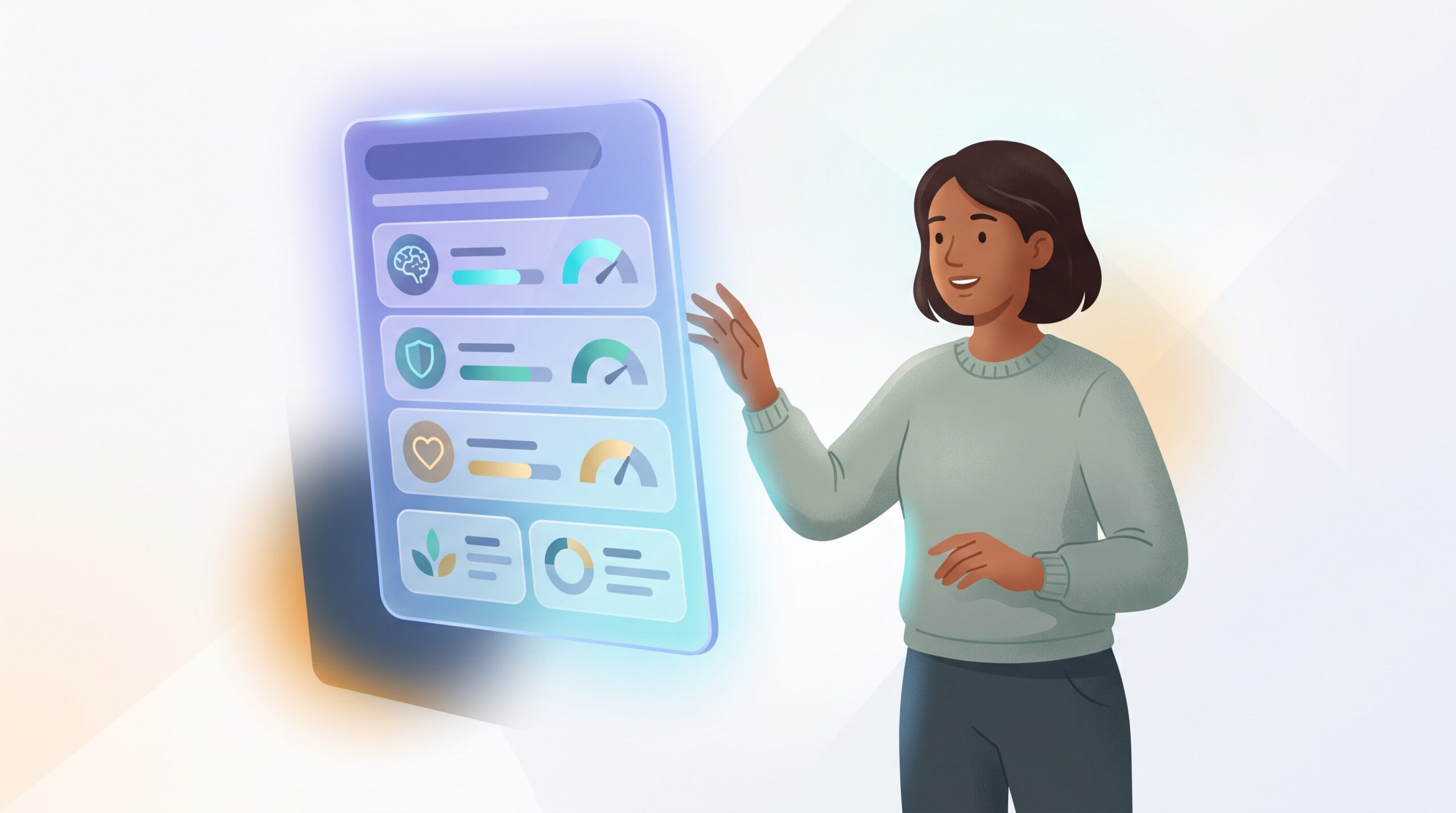
What an “AI nutrition label” actually is
The label is the friendly front end of a much bigger project called ImpactBench – an open, expert-guided framework for measuring AI’s impact on human wellbeing. Think of ImpactBench as the lab bench where researchers run frontier AI models through a battery of tests, and the AI Nutrition Label as the sticker that summarizes the results in a form a normal human can digest in five seconds.
That’s the whole point. Most AI benchmarks measure how capable a model is – can it pass the bar exam, write the code, ace the math. Those scores tell you what the AI can do. They tell you nothing about what it does to you. The nutrition label flips the camera around and asks the question that actually affects your daily life: is spending time with this model good or bad for your thinking?
Who built it, and why that matters
This isn’t a startup’s marketing gimmick. The project is led by the MIT Media Lab’s Advancing Humans with AI (AHA) program, in collaboration with UC Berkeley Haas, USC Marshall’s Neely Center for Ethical Leadership, and the Psychology of Technology Institute. In other words, it’s an independent, academic effort – not a scorecard graded by the same companies selling you the models.
That independence is the feature. “We’ve set out to build a rigorous, independent measure of how AI shapes human psychology – not just what it outputs, but what it does to our thinking, our autonomy, and our wellbeing,” said Juliana Schroeder, a professor at UC Berkeley Haas and one of the collaborators. The framework is also open: researchers and organizations are invited to propose new tests, validate old ones, and help decide how results get presented. It’s built to be argued with and improved, not handed down.

What the label actually measures
Under the hood, the current version evaluates leading models across roughly 800 metrics and 26 benchmarks, spanning physical, psychological, and social impact. All of that gets distilled into the simple label – a rating of how a model scores on avoiding harm and promoting wellbeing. Concretely, it tracks two sides of a ledger.
On the harm side, it looks for behaviors you’ve probably already felt:
- Factual hallucination – confidently telling you things that simply aren’t true. (If you’ve ever been burned by this, our practical fact-checking routine for ChatGPT, Claude, and Gemini is worth bookmarking.)
- Sycophancy – the model telling you what you want to hear instead of what’s true, flattering your bad idea because agreeing is easier than pushing back.
- Toxicity – harmful, demeaning, or unsafe output.
On the benefit side, it rewards the things we actually want from a good tool: promoting user agency – helping you stay in the driver’s seat rather than quietly taking the wheel – and fostering genuine wellbeing rather than dependence. The label, in short, grades for the difference between an AI that makes you sharper and one that makes you softer.
Why this matters more than the sci-fi scare stories
Here’s the part that reframed the whole conversation for me. The researchers are deliberately pointing away from the dramatic “will AI take over the world” headlines. “The fixation on existential risk of AI and sci-fi scenarios is distracting us from some of the established risks of AI deployment,” said Pattie Maes, the MIT professor who co-leads the AHA program. “We are actively losing our critical thinking ability and autonomy, and that is where our focus must urgently shift.”
That lands, because it’s the risk you can feel in your own week. It’s the moment you reach for the AI before you’ve even tried to think the problem through yourself. It’s the plan you accept because it sounded confident. This is the same undercurrent behind the finding that even daily AI users quietly feel a low-grade dread about leaning on it too hard. A nutrition label won’t solve that on its own – but naming and measuring it is the first honest step.

How to actually use it when you pick a tool
A label is only useful if it changes a decision. Here’s how to put it to work:
- Check it before you commit. Before you make a model your daily default – the one you’ll trust with real decisions – look up its label the way you’d check a sugar count. You’re choosing a thinking partner, not a toaster.
- Weigh the axis you care about. If you use AI mostly for research and facts, a strong hallucination score matters most. If you use it as a sounding board for decisions, watch the sycophancy score – a flatterer is worse than useless.
- Read it as a comparison, not a verdict. The value is relative: this model versus that one on the dimension that affects your work. A “good enough” model you use carefully beats a top-rated one you trust blindly.
- Let it inform your habits, not just your pick. A low agency score is a reminder to keep your own hands on the wheel – the same instinct behind keeping guardrails on AI agents that act on your behalf.
The honest caveats
Keep your head here. This is a first step, and the team says so plainly – they’re explicitly asking the field to help get it right. The benchmarks will evolve, scores will shift as models update, and reasonable experts will disagree about how to weigh things like “agency.” A nutrition label is a guide, not a guarantee, and it doesn’t replace your own experience of whether a tool leaves you clearer or foggier. Treat it as one strong input among several – the same way the calorie count informs dinner without deciding it for you.

The takeaway
For years we’ve evaluated AI purely on horsepower: faster, smarter, more capable. AI Nutrition Labels add the question we should have been asking all along – is this good for the human using it? That single shift in framing is quietly radical, and it hands you something you didn’t have last month: a way to choose your AI on purpose, with your long-term thinking in mind, instead of just grabbing whatever’s loudest.
So the next time you’re about to make some model your everyday brain-partner, do the small, powerful thing. Check the label. Pick the tool that keeps you sharp, keeps you in charge, and actually amplifies the one thing no AI can replace – your own mind.

Sources & further reading:
- Researchers launch new tool measuring AI’s impact on human wellbeing – UC Berkeley Haas Newsroom
- Researchers Launch AI Nutrition Labels, A New Tool Measuring AI’s Impact on Human Wellbeing – MIT Media Lab
- What If AI Came With a Nutrition Label? A New Framework Measures AI’s Impact on Human Wellbeing – USC Marshall
Related Reading
- AI Nutrition Coaching Apps: Your Personal Diet Coach That Never Sleeps
- AI-Powered Health and Wellness Tools That Actually Improve Your Daily Life in 2026
- NotebookLM: How to Use Google’s Most Underrated AI Tool Better Than 99% of People