ChatGPT Wallet: How AI Agents Can Now Shop and Check Out for You


For a couple of years now, the pitch for AI assistants has mostly ended at the point of talking. They could find a product, compare two laptops, draft the email, summarize the reviews — and then hand the job back to you to actually click “buy.” OpenAI’s new ChatGPT Wallet is an attempt to close that last gap. It lets ChatGPT’s agent do the final mile: browse, add to cart, and complete the checkout on your behalf.
This is the feature people mean when they say “agentic commerce,” and it is a genuine shift in what a chatbot is for. Here is what it actually does, where it will save you real time, and the common-sense guardrails worth setting before you hand a bot your card.

What ChatGPT Wallet actually does
Strip away the hype and the idea is simple. You give ChatGPT a shopping task in plain language — “reorder the coffee I bought last month,” “find a 65W USB-C charger under $30 with good reviews and buy it,” “get me two tickets to the Saturday matinee” — and the agent carries it through to a completed purchase using payment details you have stored in the Wallet. Instead of handing you a list of links, it takes the action.
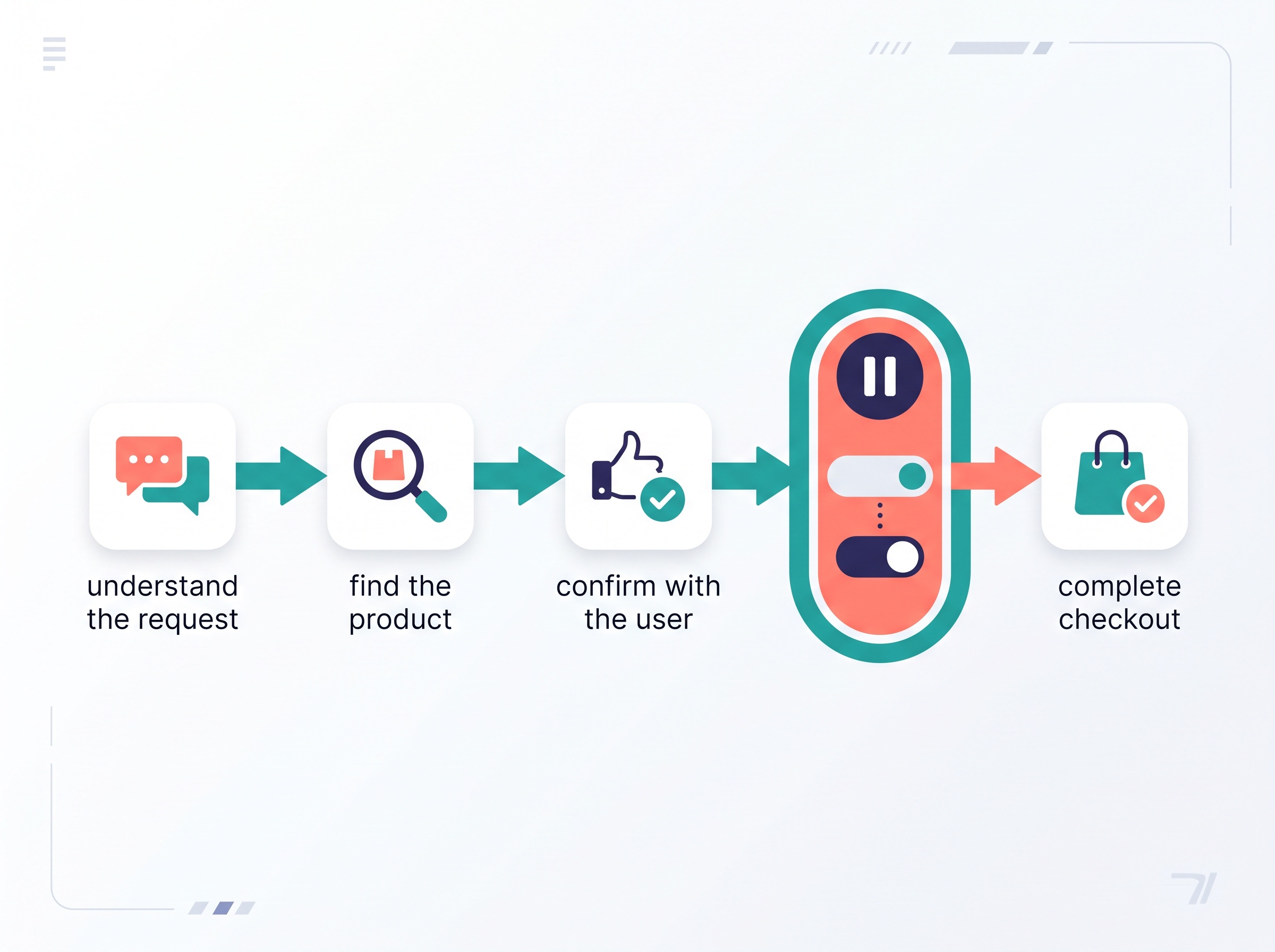
Under the hood this is OpenAI’s agent framework doing the browsing and form-filling, with the Wallet acting as the piece that holds your payment method and authorizes the transaction. The important design detail is that it is not meant to be a free-for-all: the agent is built to pause and confirm before it spends, so you stay the one who says yes. Think of it less as “the AI has my credit card” and more as “the AI can do everything up to the point of spending, then asks.”
A realistic example
Say your printer is low on toner. The old flow is: you remember the model, search for the cartridge, wade past the knock-offs, check that it is the genuine high-yield version, add it to the cart, log in, and check out. Five minutes and a small amount of irritation.
The agentic flow is: “Order another genuine high-yield toner cartridge for my printer — same one as last time, under $90.” The agent looks up the previous order, finds the matching product, confirms the price is within your limit, and shows you a one-line summary: this item, this price, ship to this address — confirm? You tap yes. Done. The value is not that it did something you couldn’t; it is that it removed the ten small steps you didn’t want to do.
Where it genuinely helps
Agentic checkout is not equally useful for everything. It shines on the purchases that are routine, low-stakes, and well-specified:
- Reordering consumables. Coffee, pet food, printer ink, cleaning supplies, office basics — anything you buy the same version of again and again.
- Spec-driven commodity buys. “A 2-metre braided USB-C cable, USB-IF certified, under $15.” Clear criteria, interchangeable products, little emotional weight.
- Comparison-then-buy. Let it do the legwork of narrowing ten options to the best two, then approve the winner.
- Booking and restocking on a schedule. The kind of errands you forget until you’re out.
Where it is not yet your friend: anything where taste, fit, or judgment matters — clothing, gifts, a big-ticket item you’d research for a week anyway. The agent can gather the information brilliantly, but the final call on those is still yours, and you’ll want it to be.

Be honest about the risks
Handing spending authority to software is a real step, and it deserves a clear head rather than either panic or blind trust. A few things to keep in view:
- Wrong-item mistakes. An agent can misread a variant — the wrong size, the wrong pack quantity, a renewal instead of a one-off. The confirmation step exists precisely because this happens; read it rather than reflexively tapping yes.
- Prompt and page manipulation. A bot that reads web pages can, in principle, be nudged by a deceptive page. Keeping purchases to reputable merchants and keeping a spending cap on reduces the blast radius.
- Subscription creep. “Buy” and “subscribe and save” look similar to an automated shopper. Be explicit when you want a one-time purchase.
- Loss of friction. Some of the annoyance of checkout is a feature — it makes you stop and think. Removing it makes impulse buying frictionless too. Set limits accordingly.

Guardrails to set before you let a bot spend
You do not have to choose between “never use it” and “let it run wild.” A handful of settings make agentic shopping both useful and safe:
- Keep a spending cap. A per-purchase and ideally a daily limit so a misunderstanding can never become an expensive one.
- Require confirmation on every purchase to start with. Only consider loosening it for a narrow, trusted category like reordering a specific consumable — and even then, cautiously.
- Use a payment method you can watch. A card with good fraud protection and alerts, not your primary account.
- Keep the receipts. Make sure every agent purchase lands in your email and order history so there is always a human-readable trail of what was bought and why.
- Start small. Give it a few genuinely boring tasks first. Trust is earned by a tool proving it gets the obvious things right.
ChatGPT Wallet is a real step toward AI that doesn’t just advise but acts — and the honest verdict is that it’s most valuable exactly where life is most tedious, not where it’s most interesting. Let it handle the toner and the coffee refills, keep a firm cap and a confirmation step on everything, and you get the upside — time back on the dull stuff — without handing over judgment you’d rather keep. That is what a tool that actually works looks like: quietly useful, firmly on a leash.
Sources & further reading:
- ChatGPT’s new Wallet lets AI agents shop and check out for you (TechCrunch)
- ChatGPT Wallet lets OpenAI’s Dots agents make purchases for you (The Verge)
Related Reading
- OpenAI Dots: What These New Always-On AI Agents Actually Do for You
- The Web Is Starting to Fence Out AI Shopping Agents: What Amazon Blocking Meta’s Muse Means for You
- AI Agents Were Supposed to Book Your Dinner. Almost Nobody’s Using Them — Here’s Where They Actually Pay Off