OpenAI Says Its AI Just Made Real Math and Physics Discoveries – Here’s What That Means for You

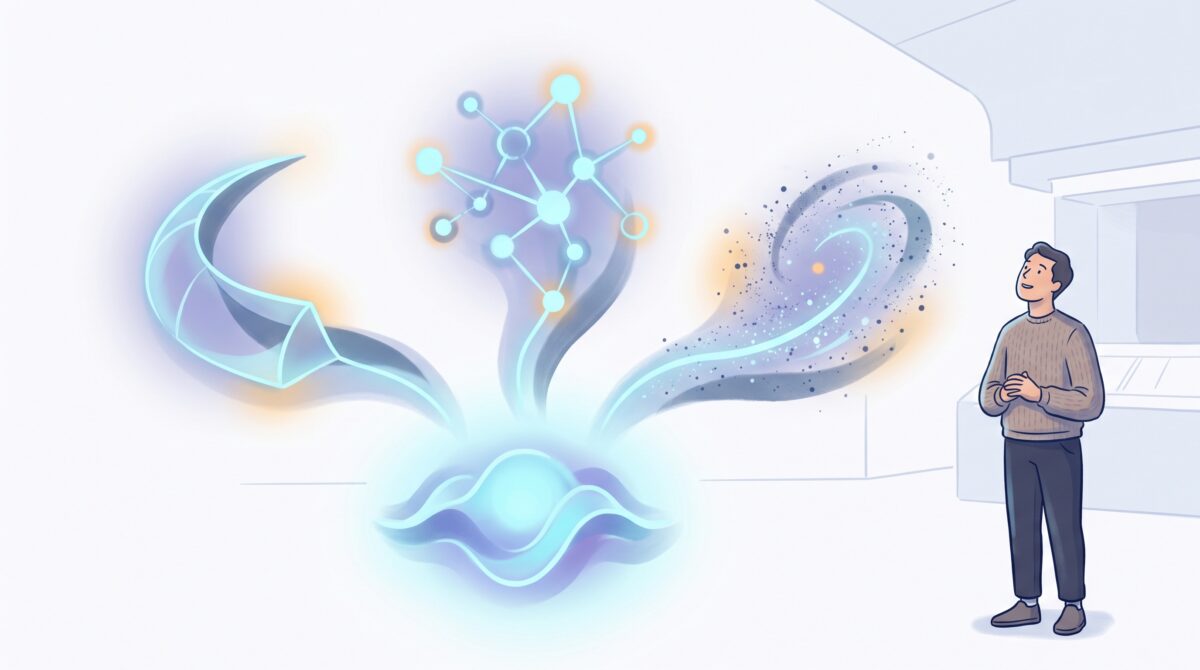
For a long time, the pitch for AI was that it could handle your tasks – write the email, summarize the report, fix the broken code. This week, OpenAI claimed something much bigger: that its AI didn’t just do the homework, it did original science. On October 26, the company announced three new “major” discoveries across math, computer science, and physics – the kind of problems that have stumped human experts for decades. If the claims hold up, it’s a genuine milestone. But the part that should actually interest you isn’t the equations. It’s how OpenAI is handling the claims – and the quiet lesson that holds for every one of us the next time an AI tells us something with total confidence.
What OpenAI actually said it discovered
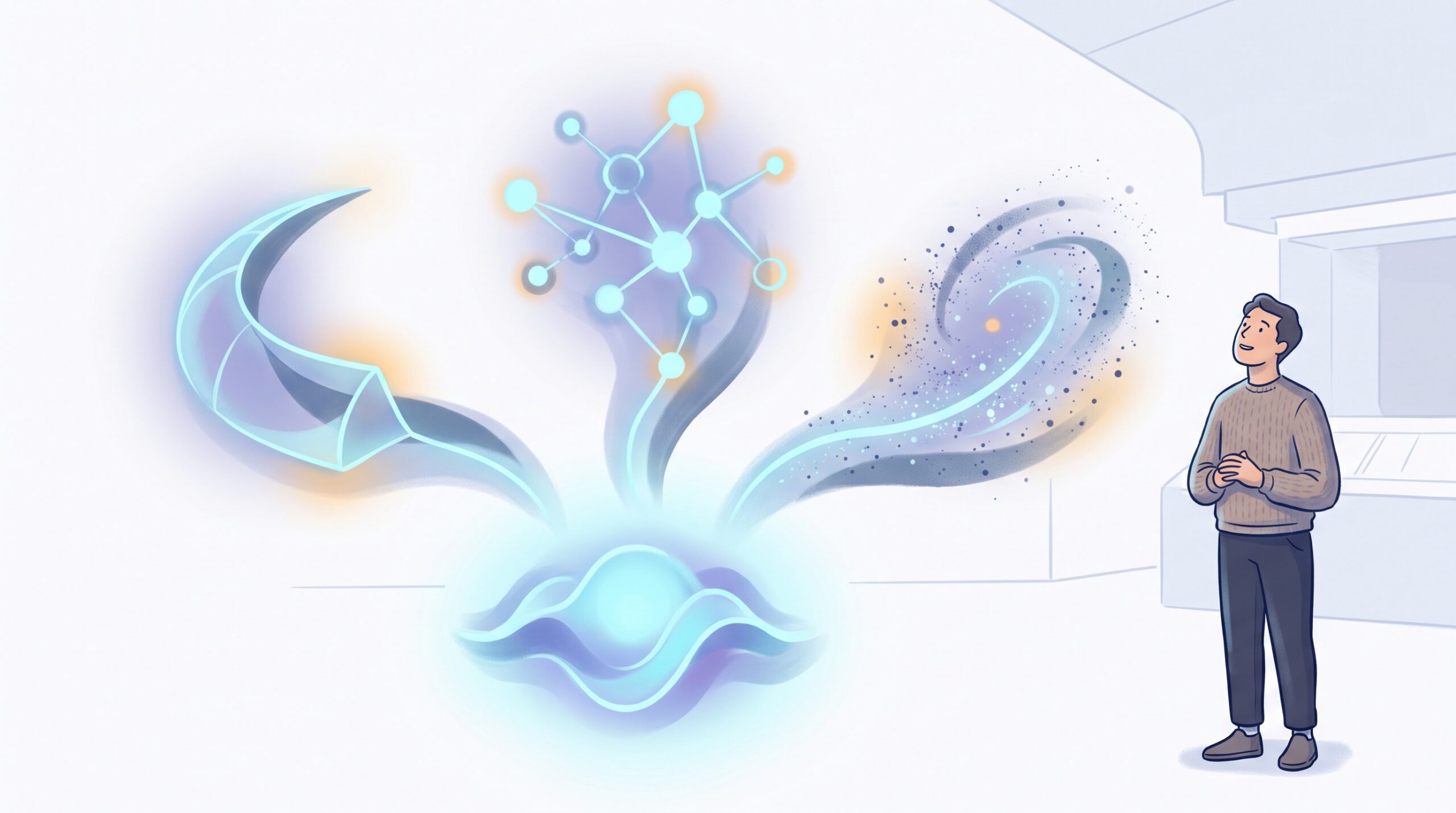
Don’t worry if the names mean nothing to you – the point is that these are career-making problems, not the sort of thing an AI was expected to touch. In plain terms, OpenAI said its models produced:
- A math proof of something called the local smoothing conjecture that, it says, also resolves the famous Kakeya conjecture and Stein’s restriction conjecture “in all dimensions.” For context: a human mathematician, NYU’s Hong Wang, won a Fields Medal this past July for cracking the Kakeya conjecture in three dimensions. The AI’s output claims the whole thing.
- A computer-science result arguing that the Exponential Time Hypothesis – a decades-old, widely-believed assumption about how genuinely hard certain problems are – is actually false. If it survives scrutiny, it reshapes a corner of theoretical computer science.
- A physics result: a “mathematically rigorous existence proof” for certain quantum field theories, including the math underpinning the Standard Model of particle physics. This one hasn’t been released in full yet.
That’s a staggering list to drop in a single blog post. Which is exactly why the next part matters more than the results themselves.

The real story is the “shepherds”
Here’s what’s new this time. OpenAI isn’t just dumping answers on the internet and taking a victory lap. It recruited external academic experts – it literally calls them “shepherds” – to guide, examine, and explain each result before the wider world works through it. The physics group is led by Nobel laureate David Gross. The computer-science proof will be scrutinized by, among others, Russell Impagliazzo and Ramamohan Paturi – two of the very researchers who proposed the Exponential Time Hypothesis back in 1999 – plus MIT’s Ryan Williams. For the math result, OpenAI posted the model’s raw output and a machine-checkable “Lean” proof straight to GitHub so anyone can pick it apart.
Why does that matter to you? Because it’s an admission of where the hard part really lives. An AI claiming a proof is worth nothing until a human can confirm it’s real. OpenAI is effectively saying the quiet part out loud: generating an impressive answer is the easy half – verifying it is the half that counts.
Why even OpenAI’s own advisers are uneasy
Now for the honest wrinkle, because this is far from a tidy triumph. The “shepherds” approach is contested – by OpenAI’s own mathematicians. Just a day before the announcement, OpenAI’s math advisory panel publicly recommended that AI companies not hand-pick specific people to receive results first, citing problems like unequal access, “borrowed reputation,” and biased selection. Their preference: post results openly on scholarly repositories, include formal proofs, be transparent about how the problems were chosen, and fund the unglamorous work of checking.
OpenAI even published an open letter asking the research community how any of this should work – who should get early access to AI-generated results, how credit should be shared between the machine and the humans who verify and explain it, and how to protect students whose field is shifting under their feet. Translation: nobody, including OpenAI, has figured out the rules yet. That healthy uncertainty is worth sitting with – it’s the same uneasy honesty showing up in the finding that even daily AI users carry a low-grade worry about how much they lean on these tools.

What this actually means for you
You’re not going to disprove the Exponential Time Hypothesis over coffee. But the exact same dynamic is already sitting in your chat window. When your AI hands you a confident answer – a legal interpretation, a medical explanation, a financial plan, a block of code – you’re in precisely the position those mathematicians are in: holding an impressive-looking claim that has not yet been verified. The biggest AI science story of the year quietly delivers the most mundane lesson of all: the output is a starting point, not a verdict.
Notice that even at the frontier, with the most capable models on Earth, the workflow still ends with human experts checking the machine’s work. That’s not a footnote. That’s the whole relationship, and it’s exactly how you should be using AI on your own, far smaller problems.

Borrow the researchers’ playbook
You can copy the method that OpenAI is using at the frontier, scaled down to everyday use:
- Treat confident output as a claim, not a conclusion. Fluency is not accuracy. A smooth, self-assured answer deserves the same skepticism as a shaky one.
- Make it show its work. Ask for sources, the steps, the reasoning. A model that can walk you through why is one you can actually check – the same instinct behind judging whether a model is genuinely good for you rather than just impressive-sounding.
- Find your own shepherd. Get a second check – a different model, a real expert, or the primary source – before you act on anything that matters.
- Keep a human in the loop. For decisions with real stakes, you are the verification step. Don’t delegate that away.
It helps to remember these systems are built, not magic – the same labs are constantly reshaping how the models learn, right down to how OpenAI trains them away from the live internet. Powerful, yes. Infallible, no.
The takeaway
There’s something genuinely thrilling here: a tool that might help crack problems humanity has chased for a century. But look closely at what the moment is really celebrating. The AI produced; the humans verified, explained, and argued. The discovery isn’t finished until a person understands it. That’s not a weakness of AI – it’s the entire partnership in miniature.
The most powerful way to use these tools isn’t to hand your judgment over to them. It’s to let them reach further than you ever could alone, and then bring your own mind to bear on whatever comes back. Check the work. Stay in the room. That’s how you turn a confident machine into a real discovery – and it’s how you keep the most valuable instrument in the whole process sharp: your own thinking.
Sources & further reading:
- OpenAI announces three big science discoveries and a new way to work with academics – The Verge
- Building scientific understanding with academic communities – OpenAI
Related Reading
- An AI Just Hacked Three Real Companies During a Test — What It Actually Means for You
- OpenAI Dots: What These New Always-On AI Agents Actually Do for You
- Even Daily AI Users Are Worried: What the Numbers Say — and How to Use AI Without the Dread