DeepSeek Just Opened Its Search API to Everyone: What You Can Actually Build With It


DeepSeek opened its Search API to all users this weekend, meaning any developer can now plug the company’s web-search engine into their own app and give an AI live, grounded results from the open internet. It landed alongside a model refresh — an updated, faster, leaner version of DeepSeek’s lineup that the Chinese startup says finishes tasks quicker and writes shorter answers. The model update grabbed the headlines, but for anyone building with AI, the open search API is the part that actually changes what you can make.
Here’s what shipped on October 17, 2026, what a search API is good for in plain terms, and the honest trade-offs to weigh before you wire it in.

What actually changed
Two things arrived together. First, the model: DeepSeek pushed an updated checkpoint of its efficient “Flash” line, touting better benchmark scores, faster task completion, and shorter outputs. The pitch is the same one that made DeepSeek famous in the first place — more capability for less compute and less money — and it keeps the pressure on Silicon Valley rivals like OpenAI and Anthropic. If the “small and cheap beats big and slow” idea sounds appealing, it’s the same logic behind why the cheap, fast model is often the smarter pick for everyday tasks.
Second, and more interesting for builders: DeepSeek opened its Search API to all users. Previously gated, the API now exposes DeepSeek Search — the company describes it as an AI-native, general-purpose search engine that indexes hundreds of billions of web pages and already handles hundreds of millions of search requests a day. It’s reachable through DeepSeek’s website, app, and now the developer API.

What is a search API, and why does it matter?
A large language model on its own only knows what it absorbed during training. Ask it about something that happened this morning and it either shrugs or, worse, confidently makes something up. A search API fixes that by letting your app run a live web query and feed the fresh results back into the model before it answers. That technique — grounding, or retrieval-augmented generation (RAG) — is what turns a clever-sounding chatbot into something you can actually trust with current questions.
Until now, if you wanted that live-web layer you reached for a handful of paid search APIs or scraped results yourself. DeepSeek throwing open a high-volume, general-purpose index — and bundling it with a model it prices aggressively — gives developers another, cheaper option for the single most important upgrade you can give an AI app.
What you can actually build with it
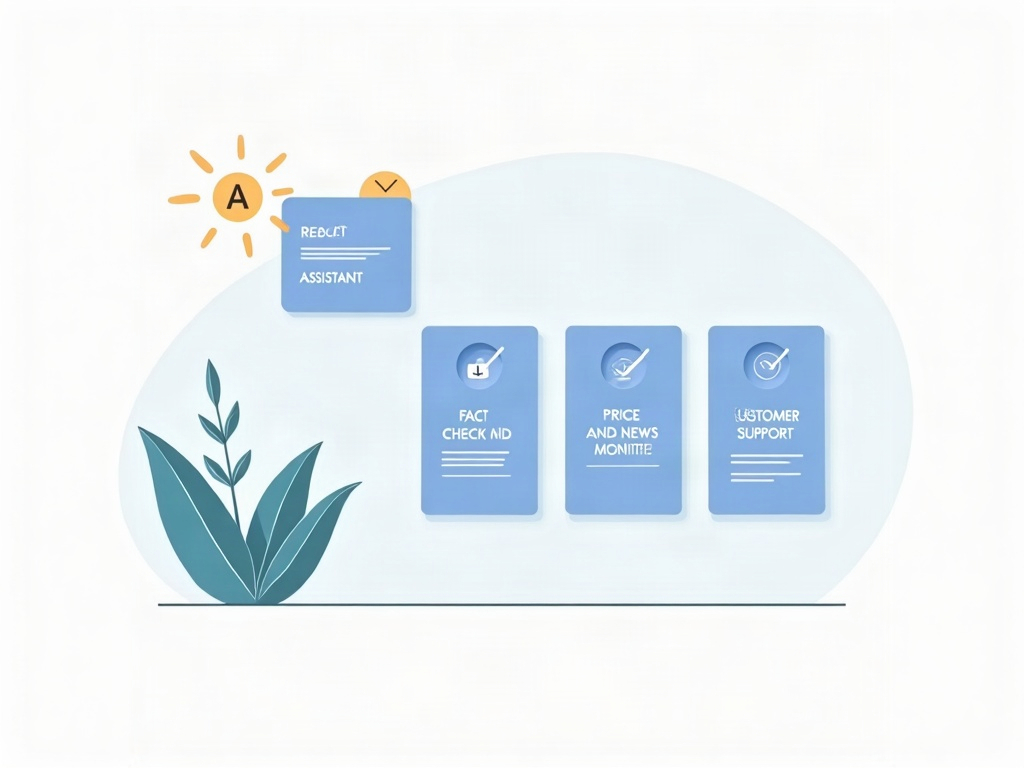
Once your AI can search, a lot of practical projects open up. The most useful ones aren’t exotic:
- A research assistant that cites its sources. Ask a question, let the model search, and have it answer with links — so you can check the claim instead of trusting it blind.
- Fact-checking and grounding. Before the model states a figure or a date, make it look it up. This is the single best defense against confident hallucinations.
- Live monitors and digests. A small script that searches for news on a topic, a competitor, or a product each morning and summarizes what’s new.
- Smarter support and internal bots. A helper that answers from the live web (or your own docs, if you combine it with your content) rather than a frozen snapshot from last year.

None of this is unique to DeepSeek — the point is that a capable search API is now cheaper and more accessible, so these builds get easier to justify. DeepSeek has spent the past couple of years making a genuinely competitive free-and-cheap alternative to the big US labs, and this is a natural extension of that strategy: own more of the stack developers need, at a price that undercuts everyone.
The honest limits — read before you build
A cheaper search API is a real gift, but it isn’t a free lunch. A few things to weigh:
- Where your data goes. DeepSeek is a Chinese company, and your queries — and whatever context you send with them — travel to its servers. For a hobby project that may be fine; for anything touching customer data, regulated information, or a business’s confidential work, run it past whoever owns your data-governance and compliance decisions first. The same care applies to any cloud AI: it’s worth knowing, for instance, how easily AI chats can end up public if you’re not deliberate.
- The benchmark claims are the vendor’s own. “Faster and leaner with better scores” is DeepSeek’s description of DeepSeek. Treat self-reported numbers as a starting point and test on your workload before you commit.
- A general web index isn’t every source. General search is great for broad questions, but it won’t replace specialized databases, paywalled research, or your own internal documents. Serious apps usually blend web search with their own curated content.
- “Open to all” still means metered. Opening access to everyone is about availability, not necessarily zero cost — API calls are typically billed per request, so budget for usage the way you would with any provider.

The bigger picture is the encouraging part. Grounding used to be the expensive, fiddly step that separated toy chatbots from tools you could rely on. With another major player opening a high-volume search API — and pricing the model beside it to move — that capability keeps getting cheaper and more ordinary. If you’ve been meaning to give your AI project real-time eyes on the web, there’s now one more affordable way to do it. Start with one small, checkable build — a research helper that cites its links — point it at a question you already know the answer to, and see whether the sources it brings back actually hold up. That’s how you turn a flashy new API into something you’d actually keep using.
Sources & further reading:
- DeepSeek releases AI model update, opens search APIs to all users — Investing.com
- DeepSeek Pushes Out Updated AI Model It Says Is Faster, Leaner — Bloomberg
- Change Log — DeepSeek API Docs
Related Reading
- DeepSeek’s V4.1-Flash Update: A Cheap, Fast Model That Now Codes Like the Big Labs
- DeepSeek R1: The Free Alternative to OpenAI o1 That Actually Competes
- The State of Open-Source AI Models in Early 2026: DeepSeek, Llama, Mistral, and the Freedom to Choose