AI Workflow Automation Platforms: Connect Your Tools Into One Intelligent System

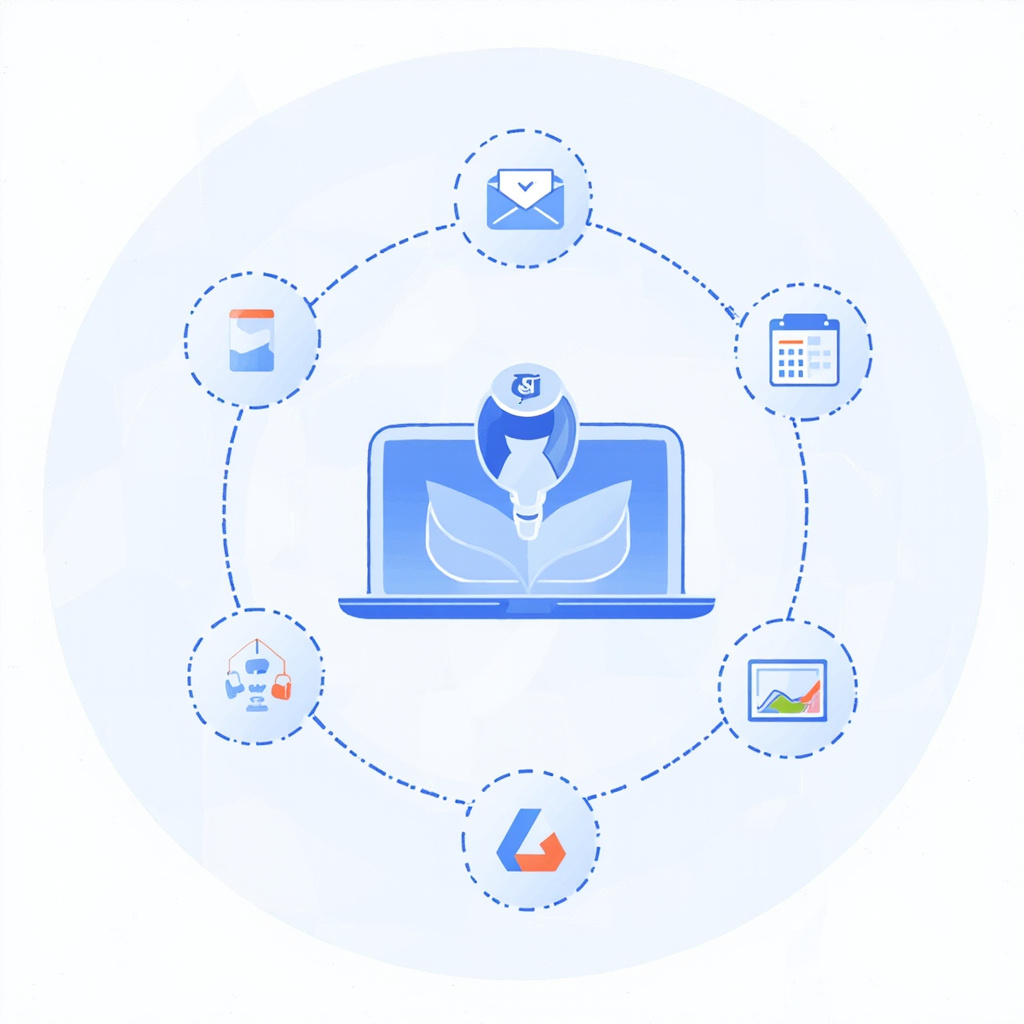
The AI revolution isn’t just about smarter chatbots—it’s about making your entire digital life work together seamlessly. While you might be using ChatGPT for writing, Claude for analysis, and various other AI tools for specific tasks, the real game-changer in 2026 is workflow automation platforms that connect all these tools into one intelligent system.
The Problem: AI Tool Islands
Most people have a collection of amazing AI tools that don’t talk to each other. You copy data from one app to another, manually trigger different tools for each step of a process, and waste time jumping between platforms. It’s like having a smart home where every device needs its own app and remote control.

This fragmentation costs you more than time—it costs you the compound benefits of AI. When tools work in isolation, you miss the exponential productivity gains that come from automation.
Enter the New Generation of AI Workflow Builders
The latest workflow automation platforms aren’t just connecting regular software anymore—they’re specifically designed to orchestrate AI tools, manage complex data flows, and handle the unique challenges of AI-powered workflows.

n8n: The Open-Source Powerhouse
n8n has emerged as the developer favorite for AI workflows, supporting LangChain integrations, custom AI models, and even retrieval-augmented generation (RAG) setups. Unlike traditional automation tools, n8n lets you host your own AI models and create sophisticated multi-agent workflows.
Best for: Teams with technical skills who want maximum customization and control over their AI workflows.
Make.com: The Visual AI Orchestra
Make.com has doubled down on AI integrations in 2026, offering sophisticated data transformation capabilities perfect for complex AI workflows. Their visual interface makes it easy to see how your AI tools connect and process data.
Best for: Marketing teams and business users who need powerful AI automation without coding.
Zapier AI: The Simplicity Champion
Zapier’s 2026 AI features focus on making automation accessible to everyone. Their AI-powered workflow suggestions can automatically recommend connections between your existing tools, and their natural language workflow builder lets you describe what you want in plain English.
Best for: Small businesses and individuals who want AI automation that just works without technical complexity.
Real-World AI Workflow Examples
Here’s how these platforms are transforming everyday work:
Content Creation Pipeline
- Trigger: New topic in research spreadsheet
- ChatGPT generates initial draft
- Claude fact-checks and refines content
- AI image generator creates visuals
- Content automatically published to WordPress
- Social media posts generated and scheduled
Customer Service Automation
- Incoming email processed by AI sentiment analysis
- Urgent issues routed to human agents
- Standard queries answered by AI assistant
- Customer data automatically updated in CRM
- Follow-up sequences triggered based on resolution type
Data Analysis Workflow
- Sales data automatically exported from multiple sources
- AI cleans and standardizes the data
- Multiple AI models analyze different aspects
- Insights compiled into executive dashboard
- Alert sent if performance drops below thresholds

The 2026 Advantage: True AI Interoperability
What makes 2026 special is that these platforms now understand AI-specific needs. They handle token limits, manage API rate limits, provide fallback options when AI services go down, and can even route requests to different AI models based on complexity or cost considerations.
Modern workflow platforms also include built-in prompt engineering tools, making it easy to fine-tune how your AI tools communicate with each other. This level of sophistication was impossible just two years ago.
Getting Started: Your First AI Workflow
The easiest way to begin is with a simple two-step automation:
- Choose a trigger: New email, new file in folder, scheduled time, etc.
- Add an AI action: Summarize content, generate response, extract data, create image
- Send the output somewhere useful: Slack notification, spreadsheet update, email reply
Start small and gradually build more complex workflows as you get comfortable with the platform.
The Future is Connected
The companies winning in 2026 aren’t necessarily using the smartest individual AI tools—they’re using AI tools that work together intelligently. Workflow automation platforms are the connective tissue that transforms a collection of AI tools into a unified intelligence system.
Whether you’re a solopreneur managing social media or a enterprise team handling complex data analysis, the key to AI success isn’t just using AI tools—it’s orchestrating them into workflows that amplify your capabilities far beyond what any single tool could achieve.
The AI workflow revolution is here. The question isn’t whether you’ll automate your AI tools—it’s how quickly you’ll get started.
Related Reading
- AI Agent Tools That Will Transform Your Workflow in 2026
- How to Use AI Agents to Automate Your Workflow in 2026
- AI Agents in 2026: The Autonomous Assistants Transforming Your Daily Workflow