AI Agents Were Supposed to Book Your Dinner. Almost Nobody’s Using Them — Here’s Where They Actually Pay Off

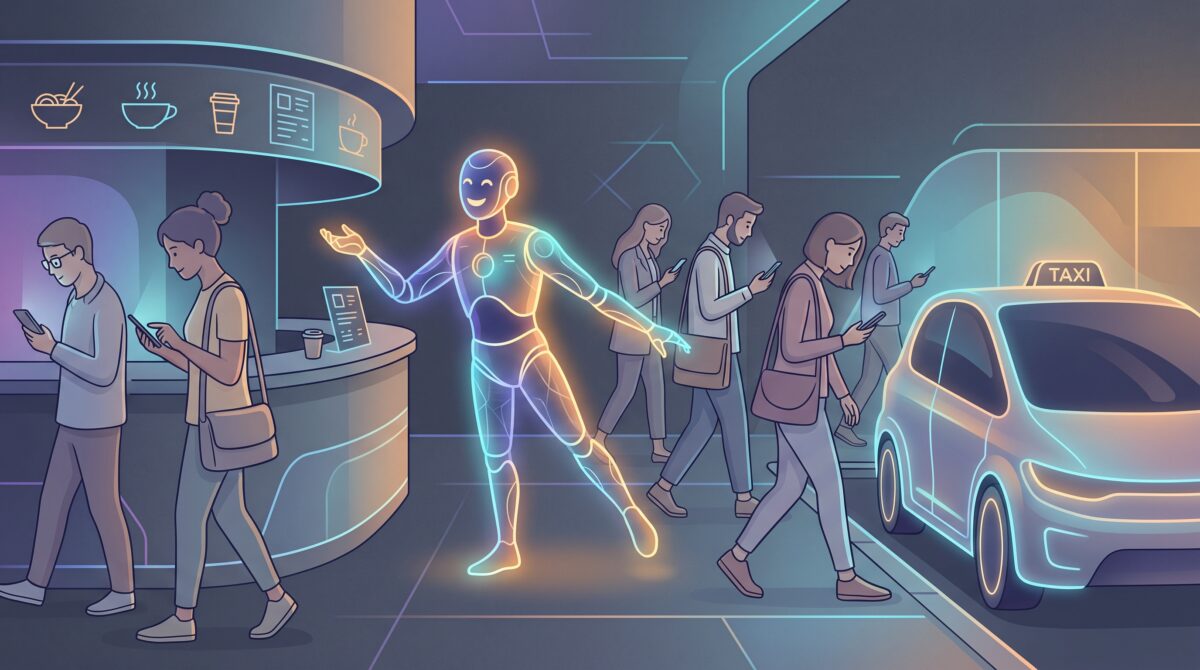
For a year now, the pitch for AI agents has been irresistible: stop tapping through apps, just tell an assistant what you want and let it go book the ride, order the dinner, reserve the room. So here’s a genuinely useful data point from the companies that would actually know — and it’s a splash of cold water.
On their autumn earnings calls, Uber, DoorDash and Airbnb were all asked how much business third-party AI agents are driving. Their answers, politely, amounted to: almost none. Uber’s finance chief said agents booked roughly four rides and about 500 Uber Eats orders during Halloween week — out of something like 320 million trips and orders. DoorDash’s CEO put total agent orders since launch at “maybe several hundred.” Airbnb’s CEO called the agent slice of its nearly half-million daily bookings “a very non-material number.”
That sounds like a verdict: agents are a bust. It isn’t. It’s a signpost — pointing away from where the hype aimed and toward where these tools quietly earn their keep. Let’s read it properly.
Why agents flopped at ordering your burrito
Look at what these executives are actually measuring: single, instant, already-frictionless actions. Uber pointed out that its own app reorders a meal in about 90 seconds. When a task is already one tap and ten seconds, routing it through an AI agent doesn’t remove friction — it adds a layer. You have to describe what you want, trust the agent to get the details right, then double-check it didn’t book the wrong night or the spicy version. For a burrito, that’s slower and scarier than just doing it yourself.

The lesson isn’t “agents don’t work.” It’s that an agent only pays for itself when it saves more effort than it costs to supervise. One-tap jobs fail that test by definition. The miss here is a mismatch between the tool and the task — not a broken tool. It’s the same gap OpenAI set out to measure when it started grading AI on messy real-life tasks like finding childcare and building a grocery budget: the interesting question was never “can it act?” but “can it act on the things that are actually a hassle?”
Where agents actually pay off today
Flip the test around and the real use cases light up. An agent earns its keep when a job is multi-step, repeatable, and tedious enough that you’d otherwise keep doing it by hand. Think:
- Monitoring and alerting. “Watch this topic / price / listing and tell me when something meaningful changes.” You’d never remember to check it five times a day; an agent doesn’t mind.
- Routine research and summaries. Pulling the same kind of information from a dozen sources into one tidy digest — the chore that eats an hour and produces something you could have described in a sentence.
- Drafting and triage. First-pass replies, sorting an inbox or a backlog, turning rough notes into a structured doc you then polish.
Notice the pattern: these aren’t ten-second taps. They’re the forty-minute, every-week chores where the describing-and-checking overhead is tiny next to the work saved. That’s exactly the territory tools like Perplexity’s background “Teammates” agents are aiming at — ongoing jobs you hand off once rather than errands you could finish yourself before the agent even starts.

The three-road test for any task
Before you reach for an agent, run the job through three roads and pick the shortest one:
- Do it yourself when it’s a single quick action — a reorder, a one-line reply, a known booking. If it’s faster to just tap, tap.
- Ask a chatbot when you need an answer or a draft right now, once. No ongoing job, no actions taken on your behalf — just information you’ll use immediately.
- Hand it to an agent when the task is recurring, multi-step, and you’re happy to review the output before acting on it. This is the only road where “set it and mostly forget it” actually beats doing it yourself.
Most of the “agents are disappointing” stories are really just tasks shoved onto the wrong road. Booking a single ride belongs on road one; the headlines treated it as road three.

Why the big platforms still care
If agents book four rides a week, why are Uber, DoorDash and Airbnb all building their own? Because they’re betting the curve bends — and because they’d rather own the agent than let an outside one sit between them and you. Airbnb has said its own travel agent is coming in 2027. The executives aren’t declaring defeat; they’re declaring it “very early,” which in plain English means the behavior hasn’t formed yet. People don’t reach for an agent to do a thing that’s already easy, so the platforms are racing to make agents do the things that aren’t.
That’s also why the most interesting agent products aren’t trying to replace a tap. They’re trying to be proactive — coming to you with the recurring work already in progress — rather than waiting for you to send them on an errand you could run yourself.
The takeaway you can use this week
Don’t judge AI agents by whether they can order your dinner. By that bar they look useless, and the earnings calls prove it. Judge them by a better question: is there a recurring, multi-step chore in my week that I’d happily describe once and review later? If yes, that’s where an agent pays off right now — not at the checkout button, but at the boring, repeated work behind it.

The people getting real value from agents today aren’t the ones automating a two-minute booking. They’re the ones who found the forty-minute chore they kept re-doing, handed it off cleanly, and got good at checking the result. Find your version of that chore, and the agent era stops being hype and starts being useful.
Sources & further reading:
- AI agents are getting limited traction at Uber, DoorDash and Airbnb – Fortune
- Uber Eats sees little traffic from AI agents – Nation’s Restaurant News
Related Reading
- Perplexity’s New ‘Teammates’ Let AI Work While You’re Away — Here’s What That Actually Looks Like
- Slack Just Got a Real AI Agent: What the New Slackbot Can Actually Do for You
- ChatGPT Wallet: How AI Agents Can Now Shop and Check Out for You