Perplexity’s New ‘Teammates’ Let AI Work While You’re Away — Here’s What That Actually Looks Like


For three years the deal with AI has been simple and a little exhausting: you ask, it answers, you ask again. The assistant sits there, bright and willing, but it never does anything until you prompt it. On November 4, 2026, Perplexity put a stake in the ground against that whole rhythm — and it’s worth understanding even if you have no plans to buy what they’re selling.
The launch is called Teammates: persistent AI agents you hand an ongoing job, and that then work it in the background instead of waiting on your next message. It’s the clearest consumer-facing example yet of the shift everyone in AI keeps gesturing at — from a chatbot you operate to an agent that owns a task. Here’s what that actually looks like, who it’s for, and the catch that matters.

What a ‘Teammate’ actually is
Strip away the branding and a Teammate is an agent with three traits a normal chatbot doesn’t have. First, it’s persistent: each one keeps its own dedicated thread open and stays assigned to a job rather than resetting after every answer. Second, it’s proactive: it works in the background on automations and pulls you in only when a decision actually needs you, instead of sitting idle until prompted. Third, it has context: Perplexity says each Teammate draws on your existing workspace — past projects, custom skills, and the memory it’s accumulated from previous interactions — so you’re not re-explaining yourself every time.
You can also run several at once, handing different jobs to different Teammates that work simultaneously. One could watch a topic and flag changes; another could keep a running research doc current; another could handle routine follow-ups in Slack, which Perplexity singled out as a launch integration.
The difference between prompting and delegating
Here’s the everyday version. With a normal assistant, “keep an eye on our competitor’s pricing” is a thing you have to remember to check, by prompting the AI each time. With an agent model, that sentence becomes a standing job you hand off once — the agent keeps watching and tells you when something moves.
That’s a genuine shift in who holds the loop. The chatbot era put the burden of initiative on you; the agent era tries to move it onto the software. It’s the same direction behind Anthropic’s Claude Duet, the proactive agent that comes to you rather than waiting to be summoned — Perplexity is just betting on the “ongoing work” framing hardest.
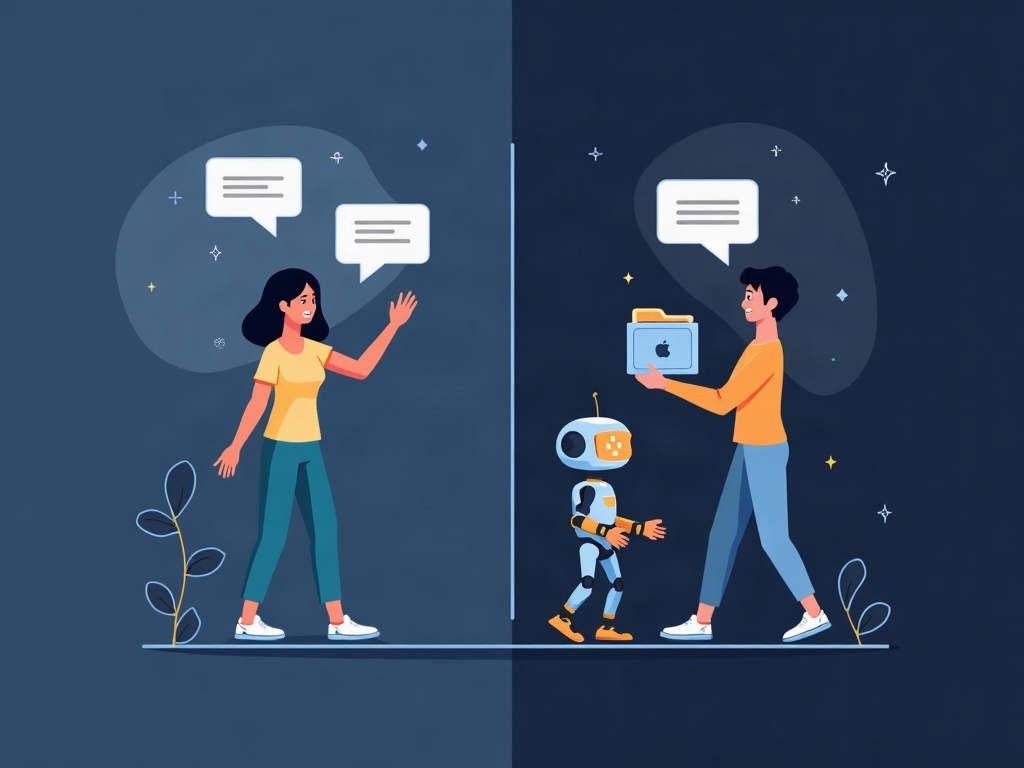
Where this pays off is repeatable, well-defined jobs — the monitoring, the routine digging, the keeping-a-document-current chores that are easy to describe but tedious to keep doing. Those are exactly the tasks a background agent can own without much drama.

The catch: who this is really for right now
Now the part the launch-day excitement glosses over. Teammates isn’t a free feature you can go try this afternoon. At launch it requires Perplexity’s top-tier Max plan at $200 a month. It rolled out on the web with iOS available and Android planned later. It’s free to use during a promotional period for Max subscribers, but Perplexity has signaled it will eventually meter the technology with credits — so the real, ongoing cost is still fuzzy.
Two hundred dollars a month is a serious number. It’s dramatically more than the agent features bundled into OpenAI’s and Anthropic’s cheaper tiers, and it firmly plants Teammates in power-user and small-business territory, not everyday-consumer territory. If you’re a solo professional whose time is genuinely worth more than that and you have a clear, recurring job to offload, the math can work. For most people casually curious about AI, it won’t — and that’s fine.

How to decide if a background agent is worth it
Whether it’s Teammates or a cheaper rival, the same test tells you if an “agent that works on its own” is actually for you. Reach for one when the job is:
- Repeatable and well-scoped. You can describe it in a sentence or two and it looks roughly the same every time.
- Tolerant of a review step. You’re happy to check the output before acting on it, so an occasional mistake is caught, not catastrophic.
- Genuinely ongoing. It recurs often enough that “set it and forget it” saves real time versus just doing it yourself.
And steer clear when the task is a one-off (a normal chat is faster), when it involves high-stakes actions you can’t easily undo, or when it needs judgment you can’t verify afterward. An agent that quietly does the wrong thing all week is worse than no agent at all. This is the same lesson behind OpenAI’s LifeVal push to test AI on messy real-life tasks — the useful question isn’t “can it act?” but “can it act reliably enough that you’d trust it unsupervised?”
The bigger shift — and the skill that actually matters
Zoom out and the price tag is a footnote. The important thing is the direction: the industry is racing to turn assistants into colleagues that hold a task over time, and Teammates is one of the most committed swings at it yet. You can see the same instinct rippling through everything from proactive chat agents to agentic tools that carry a creative project from brief to finished output. The one-prompt-at-a-time era isn’t over, but it’s clearly no longer the only model.
Which means the skill worth building isn’t “learn Perplexity” or “pay for the fanciest agent.” It’s learning to delegate well: to scope a job clearly enough that something else can run it, and to build a quick habit of verifying the result instead of babysitting the process. Get good at that, and it transfers to whatever agent you eventually use — free or $200 a month.

So you don’t need to buy Teammates to take the lesson from it. The next time you catch yourself doing the same small research or monitoring chore for the third time this week, stop and ask: could I describe this well enough to hand it off? That question — not the subscription — is the actual upgrade.
Sources & further reading:
- Perplexity launches Teammates, persistent AI agents for Max subscribers – LetsDataScience
- Perplexity launches Teammates for ongoing AI assignments and Slack follow-ups – CTOL Digital
Related Reading
- AI Agents Were Supposed to Book Your Dinner. Almost Nobody’s Using Them — Here’s Where They Actually Pay Off
- Slack Just Got a Real AI Agent: What the New Slackbot Can Actually Do for You
- Agentic AI Video Is Here: What You Can Actually Make Now — and How to Start