Judgement Models: The New Class of AI That Grades Other AI — and Why It Quietly Affects You

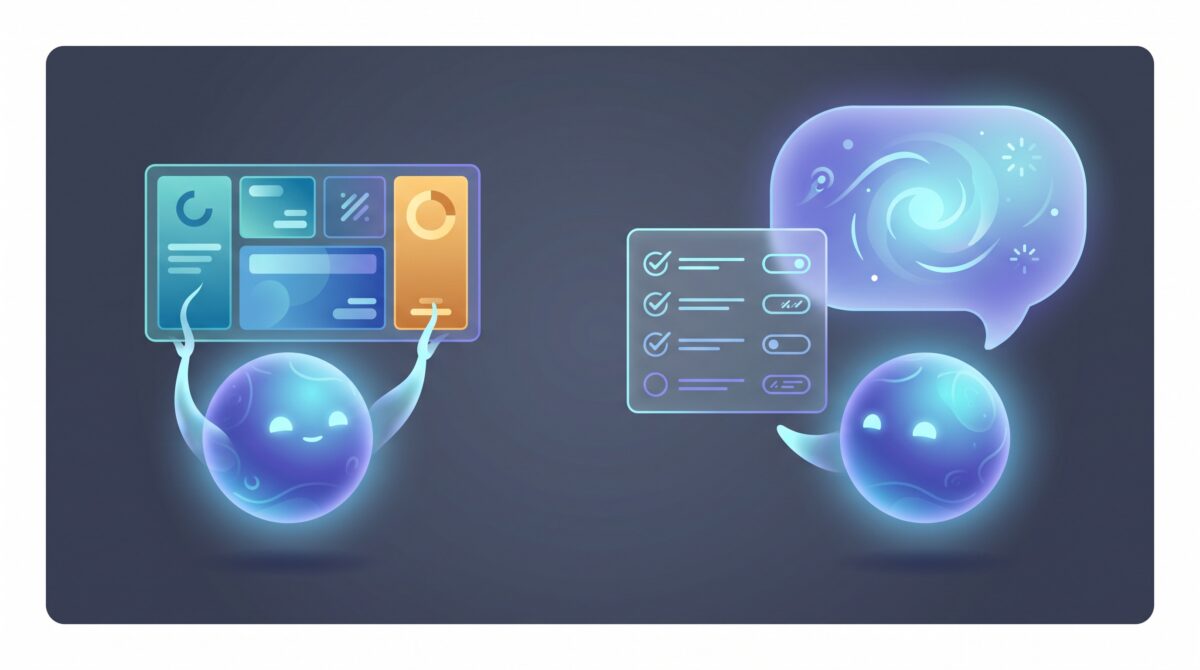
A judgement model is an AI whose job isn’t to answer your question — it’s to grade the answer another AI just gave. You hand it the original prompt, the AI’s response, and a set of criteria (“is this accurate? helpful? on-policy? free of made-up facts?”), and it returns a score and a reason. The industry calls the technique LLM-as-a-judge, and over the past year it has quietly become the default way companies check whether their AI is actually any good. You’ll almost never see it, but it increasingly decides which AI answers reach you.
Why AI suddenly needed a referee
Here’s the problem that created this whole category. Getting an AI to do something impressive once is easy. Getting it to do that thing correctly on the ten-thousandth try, for a real customer, with money or safety on the line, is the hard part. A recent Hugging Face piece put it perfectly: your agent aced the task — but will it do it again? Consistency, not raw capability, is where AI tools quietly fall down.
The old way to check was to have people read the outputs and rate them. That works for a hundred answers. It completely collapses when your chatbot, summarizer, or coding assistant is producing millions of responses a day. Human review is slow, expensive, and impossible to run on every single output. So teams did the obvious-in-hindsight thing: they pointed a strong AI at the firehose and asked it to be the first line of quality control.
How a judgement model actually works
The mechanics are simpler than the name suggests. A judge model is usually a capable general-purpose model (the strongest ones are used precisely because they reason well) given a very specific instruction set — a rubric. Instead of “answer this,” it’s told “evaluate this.”
A typical setup gives the judge three things: the user’s original request, the response being graded, and clear criteria to score against. The criteria are where the value lives — things like factual accuracy, whether the answer stayed on topic, whether it followed policy, whether it invented citations, or whether it matched a known correct answer. The judge then returns a score plus a short written justification, so a human can spot-check its reasoning later.
What makes this better than the old rule-based checks is that a judge model understands meaning. It knows that “the meeting is at noon” and “we’ll meet at 12 PM” say the same thing, and it can assess open-ended, creative answers that no keyword-matching script could ever score. That’s the same strength — and, as we’ll see, the same weakness — that makes these models useful in the first place.

The numbers that made everyone switch
Two figures explain why LLM-as-a-judge went from clever trick to standard practice almost overnight.
The first is cost. Automated evaluation with a judge model runs somewhere between 500 and 5,000 times cheaper than paying humans to review the same outputs. When you’re checking millions of responses, that’s not a saving — it’s the difference between checking everything and checking nothing.
The second is accuracy, and it’s the surprising one. Good judge models agree with human reviewers roughly 80 to 85 percent of the time. That sounds imperfect until you learn the comparison point: two humans grading the same answers often agree with each other less than that. The AI judge isn’t just cheaper than a person — on many tasks it’s about as consistent as the people it replaced. That combination is why, in 2026, evaluating AI applications with another AI is simply how it’s done.
Where you already meet judge models without knowing it
You don’t buy a judgement model, and you’ll never chat with one. But you feel their effects constantly, because they sit behind the scenes of tools you use every day:
- Customer-support chatbots are graded by judge models on whether they resolved the issue and stayed polite and on-policy — the results shape how the bot gets tuned.
- AI agents that book, buy, or file things on your behalf are checked for whether they actually completed the task correctly, not just whether they claimed to.
- Search and RAG systems (the AI answers that cite documents) use judges to catch responses that drift from the source material.
- Coding assistants lean on judge models to score whether generated code is correct and safe before that pattern gets baked into the product you rely on.
In every case, the judge is a filter and a feedback loop. When a version of an AI tool feels noticeably more reliable than it did six months ago, a judgement model was very likely part of how it got there.
The catch: who judges the judge?
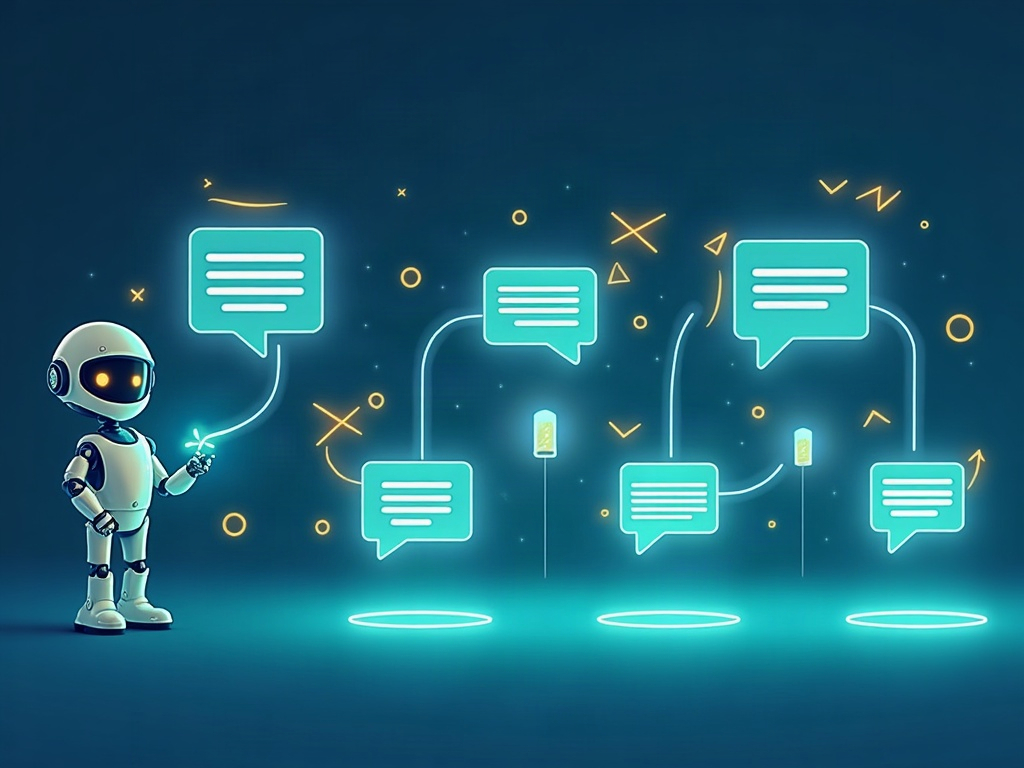
This is the part the marketing skips. A judge model is still just an AI, which means it inherits every AI weakness — it can be confidently wrong about its own verdicts. Researchers have documented a few consistent traps.
Judges show position bias (favoring whichever answer they see first in a comparison), length bias (mistaking longer, more elaborate answers for better ones), and — most awkwardly — self-preference, where a model tends to rate its own family of outputs more highly. A judge can also be gamed: an answer written to sound authoritative and well-structured can score well even when it’s wrong, which is exactly the failure mode you’d least want a quality-checker to have.
None of this makes judge models useless — it makes them a powerful tool that still needs supervision. The teams that use them well keep humans in the loop for the high-stakes calls, audit the judge’s reasoning regularly, and never treat a green checkmark from one AI grading another as the final word. It’s the same lesson that shows up everywhere in this field: automation earns trust through verification, not vibes, which is exactly why building your own habit of spotting AI hallucinations with a quick fact-checking routine still matters no matter how many AIs are checking each other upstream.
What this actually means for you
You don’t need to run a judge model to benefit from understanding them. A few practical takeaways:
First, when a vendor claims their AI is “95% accurate,” ask who measured that, and how. Increasingly the answer is “another AI graded it,” which is legitimate — but it’s a very different claim than “experts reviewed it,” and worth knowing the difference. Second, the same rubric idea works for you personally: when you use ChatGPT, Claude, or Gemini for something important, you can literally ask a second model (or a fresh chat) to critique the first one’s answer against specific criteria. It’s a poor-man’s judge model, and it catches more than you’d expect.
Finally, this is a reminder that the AI race isn’t only about flashier answers — a huge amount of the real progress is happening in the unglamorous work of measuring reliability, which ties directly into the broader industry conversation about pacing the frontier and building AI that’s trustworthy, not just impressive. And if the endless parade of new models and features leaves you unsure which tool to commit to, our guide to beating model fatigue and just getting work done pairs neatly with this one.
The bottom line
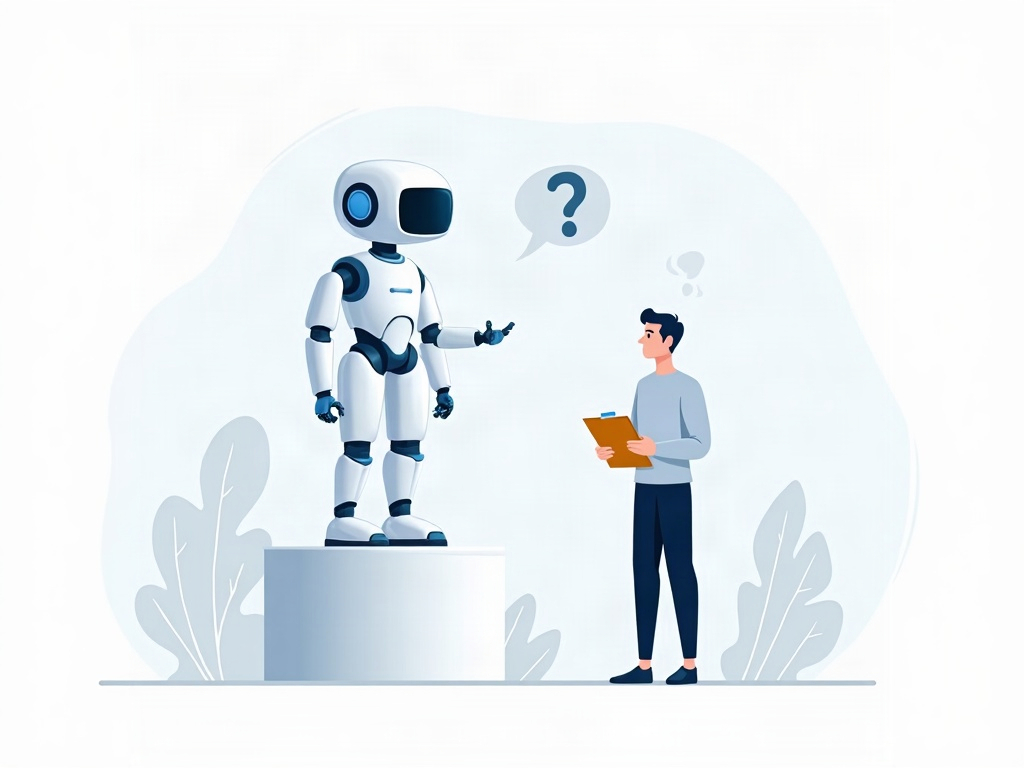
Judgement models are one of the most consequential AI developments you’ll never directly interact with. They’re the quality-control layer that lets companies deploy AI at a scale no human review team could ever police — cheaper than people, and about as consistent, with real blind spots that keep a human in the loop for anything that counts. The takeaway isn’t to fear them or worship them. It’s to understand that behind the smooth AI answer in front of you, there’s increasingly another AI whose only job was to ask, “is that actually good enough?” Knowing that layer exists — and where it can be fooled — makes you a sharper, more skeptical, and ultimately more capable user of every AI tool you touch.
Sources & further reading:
- LLM as a Judge: A 2026 Guide to Automated Model Assessment
- LLM as Judge: How Enterprises Automate AI Quality Assurance
Related Reading
- Anthropic’s New Legal AI Tool: How Claude is Automating Contract Reviews and Changing Law Forever
- The AI Industry Just Called for a Slowdown on Itself: What ‘Pacing the Frontier’ Means for You
- 7 AI Agents That Actually Work for You While You Sleep (Not Just Chatbots)