Nvidia Just Gave Away an AI That Runs on Your Own Machine: Meet Nemotron 3.5 Lightning

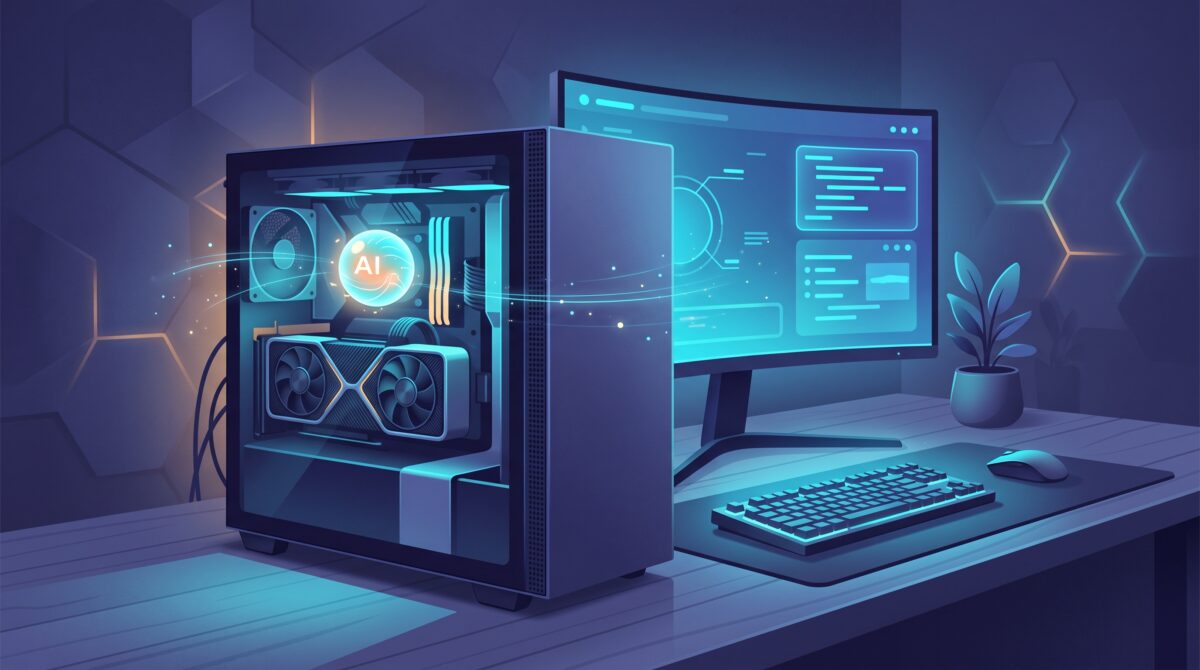
For most of the AI era, the smartest models have lived somewhere you can’t see: a data center you rent by the token, behind an API, learning from whatever you type. On August 11, 2026, Nvidia did something quietly different — it gave one away, small enough to run on a single graphics card in your own desktop.
It’s called Nemotron 3.5 Lightning, and here’s the direct answer to what it is: a free, open-weight AI model — a 30-billion-parameter “mixture-of-experts” design that only fires about 3 billion parameters per request, which is why it’s fast and light enough to run locally rather than in a giant cloud. It’s built not to be a chatty do-everything genius, but to be the quick, tireless worker inside AI agent systems: reviewing code, using tools, watching security alerts, answering routine questions. And because Nvidia published the weights under a permissive license, anyone can download it, run it, and even retrain it on their own data.
Why “Open and Local” Is the Part That Matters to You
Skip the parameter counts for a second, because the real story is control. When a model is open and small enough to run on your own machine, three things change in your favor:
- Privacy: the data you feed it never has to leave your hardware. For anyone handling client files, health records, or just personal documents, that’s not a nice-to-have — it’s the whole game.
- Cost: there’s no meter running. Once it’s on your machine, you can run it a thousand times a day for the price of the electricity.
- Permanence: nobody can deprecate it, raise the price, or change its personality overnight. The copy you downloaded is yours.
If that appeal sounds familiar, it’s the same reason we were so taken with running models on our own computer earlier this year — an experience we wrote up in our first-hand account of putting private, offline AI on our own machine with Ollama. Nemotron 3.5 Lightning pushes that same trend forward, but with real muscle behind it.
What It’s Actually For (and What It Isn’t)
This is where people get the wrong idea, so let’s be precise. Lightning is not trying to beat the big frontier chatbots at writing your essay or debating philosophy. Nvidia designed it for high-volume, long-running agentic tasks — the repetitive grunt work that piles up when an AI is actually doing things rather than just chatting.
Think of the jobs Nvidia points to directly: reviewing code, calling tools, monitoring security alerts, handling billing questions. These are tasks you might need to run thousands of times an hour, where being fast and cheap beats being brilliant. Nvidia claims up to 4x faster output and roughly 30% quicker task completion than comparable models in its class — exactly the kind of edge that matters when volume is the point.
It’s the same logic we’ve made the case for before: you don’t need a frontier model for most of the work you actually do. A fast, capable specialist that runs for free is often the smarter tool.
The Big Idea: A “System of Models,” Not One Super-Brain
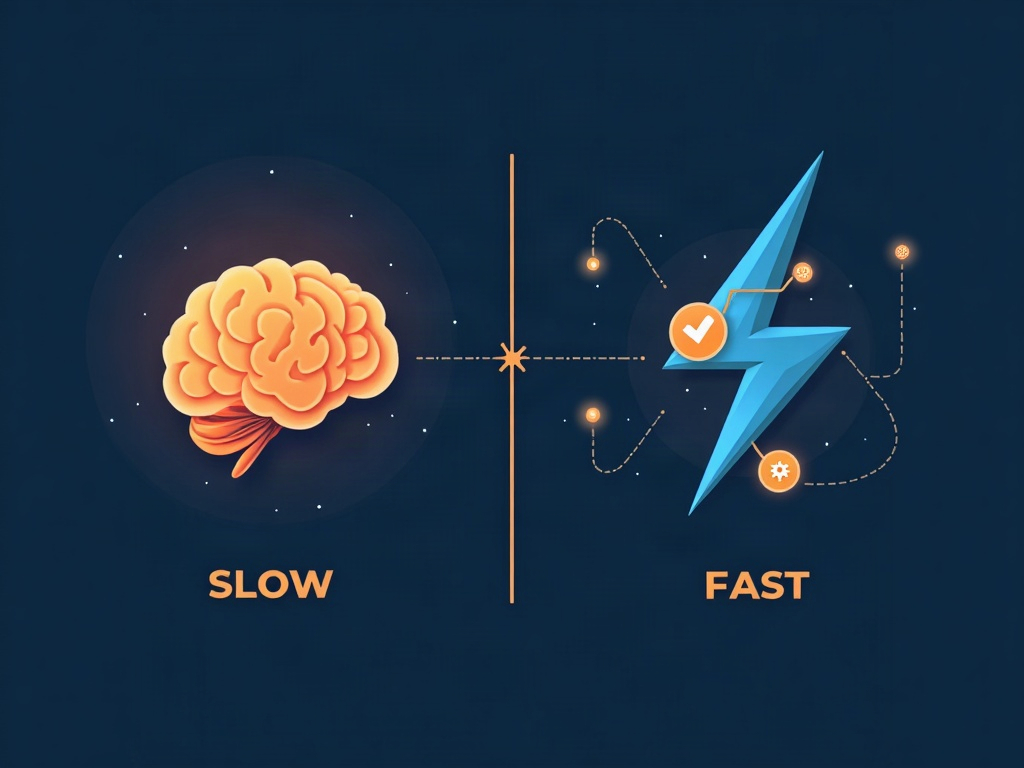
Nemotron 3.5 Lightning only makes full sense once you understand the architecture Nvidia is betting on. Instead of one enormous model doing everything, modern AI agents increasingly work as a system of models — a team, basically.
A big, powerful reasoning model acts as the planner: it breaks a goal into steps and decides who does what. Then smaller, faster specialists like Lightning execute those steps — the way a senior architect sketches the plan while a fast, focused crew does the building. Alongside Lightning, Nvidia released an open-source router called NeMo Switchyard that plays traffic cop, sending each request to whichever model is best suited to it.
If “agents that reach into your tools” still sounds abstract, the plumbing that makes it possible is worth a look — we broke it down in our plain-English explainer on MCP, the standard that lets AI assistants actually do things. Lightning is the kind of engine that runs on the other end of those connections.
Who’s Already Using It
This isn’t a lab curiosity. Nvidia says companies are already tuning Lightning for real work: CrowdStrike for cybersecurity, the legal-AI firm Harvey, and CodeRabbit for automated code review, among others. The through-line is telling — these are all high-volume, specialized jobs where a fast, customizable, private model earns its keep. And because Nvidia releases the training recipes and data where licensing allows, any team can fine-tune it on their own domain instead of renting someone else’s black box.
How to Actually Try It
Here’s the honest part: this one leans more technical than downloading a chat app. But if you’re curious, the path is real and open:
- Grab the weights. The open model is published for download (Hugging Face and Nvidia’s own build catalog are the usual starting points). Nvidia ships both standard and quantized versions, so you can pick one that fits your hardware.
- Check your GPU. “Runs locally” here means an Nvidia RTX-class graphics card or workstation — not a phone, and not a basic laptop. A 30B mixture-of-experts model is light for its class, but it still wants a capable GPU with enough memory.
- Start inside a framework. Rather than wiring everything by hand, run it through an agent framework or a local runner so the model has tools to actually use. That’s where a specialist like Lightning shines.
Not ready to touch weights and GPUs? That’s fine — the friendlier on-ramp to local AI is still a tool like Ollama or LM Studio, which we walk through step by step in our beginner’s guide to running your own private AI offline.
Why This Release Matters Even If You Never Download It
Here’s the bigger picture. Every time a company as central as Nvidia releases a capable model openly — weights, license, and recipes — it shifts the balance of power a little further toward the people using AI and away from the handful of firms renting it out. The open-source side of AI has been quietly closing the gap on the closed frontier for over a year now, a trend we tracked in our rundown of the open-source model landscape, and Lightning is another brick in that wall.
The practical takeaway: the AI doing your future grunt work is increasingly likely to be free, open, and running on hardware you control. That’s not just cheaper — it’s more private, more permanent, and more yours. The frontier chatbots will keep grabbing headlines, but the quiet revolution is the fast little workhorse humming away on your own machine, doing the boring thousand-times-a-day jobs so you don’t have to. Keep an eye on it — that’s where AI stops being a service you rent and starts being a tool you own.
Sources & further reading:
- NVIDIA Nemotron 3.5 Lightning and NeMo Switchyard Deliver Faster, Smarter, More Efficient Agentic AI
- NVIDIA Nemotron 3.5 Lightning Delivers Fast, Accurate Specialized Task Execution for Long-Running Agents
Related Reading
- How to Keep Your AI Agents From Going Rogue: Guardrails That Actually Work
- OpenAI Dots: What These New Always-On AI Agents Actually Do for You
- The AI Price War Is Here — And You Just Became the Winner