Voice AI Gets Personal: The Best AI Assistants Transforming Daily Life in February 2026


Your relationship with AI is about to get a lot more personal. February 2026 has brought us to an inflection point where voice-powered AI assistants have transcended basic commands to become sophisticated conversation partners that understand context, emotion, and intent in remarkably human-like ways.
We’re no longer talking about simple “Hey Siri, set a timer” interactions. Today’s AI assistants are conducting nuanced conversations, managing complex workflows, and adapting their personalities to match your preferences and mood. The line between artificial and natural conversation is blurring in ways that seemed like science fiction just months ago.
The New Generation of Conversational AI
Leading the charge are the February 2026 flagship models: Claude Opus 4.6 dominates writing and creative tasks, GPT-5.2 excels at reasoning and problem-solving, while Google’s Gemini 3 has revolutionized multimodal interactions by seamlessly processing voice, image, and text simultaneously.
What makes these assistants remarkable isn’t just their intelligence – it’s their conversational sophistication. Claude Opus 4.6 can maintain context across hours-long conversations, remembering details from earlier in the day and building on previous discussions. GPT-5.2’s advanced reasoning capabilities mean it can work through complex problems step-by-step, explaining its thinking in natural language.
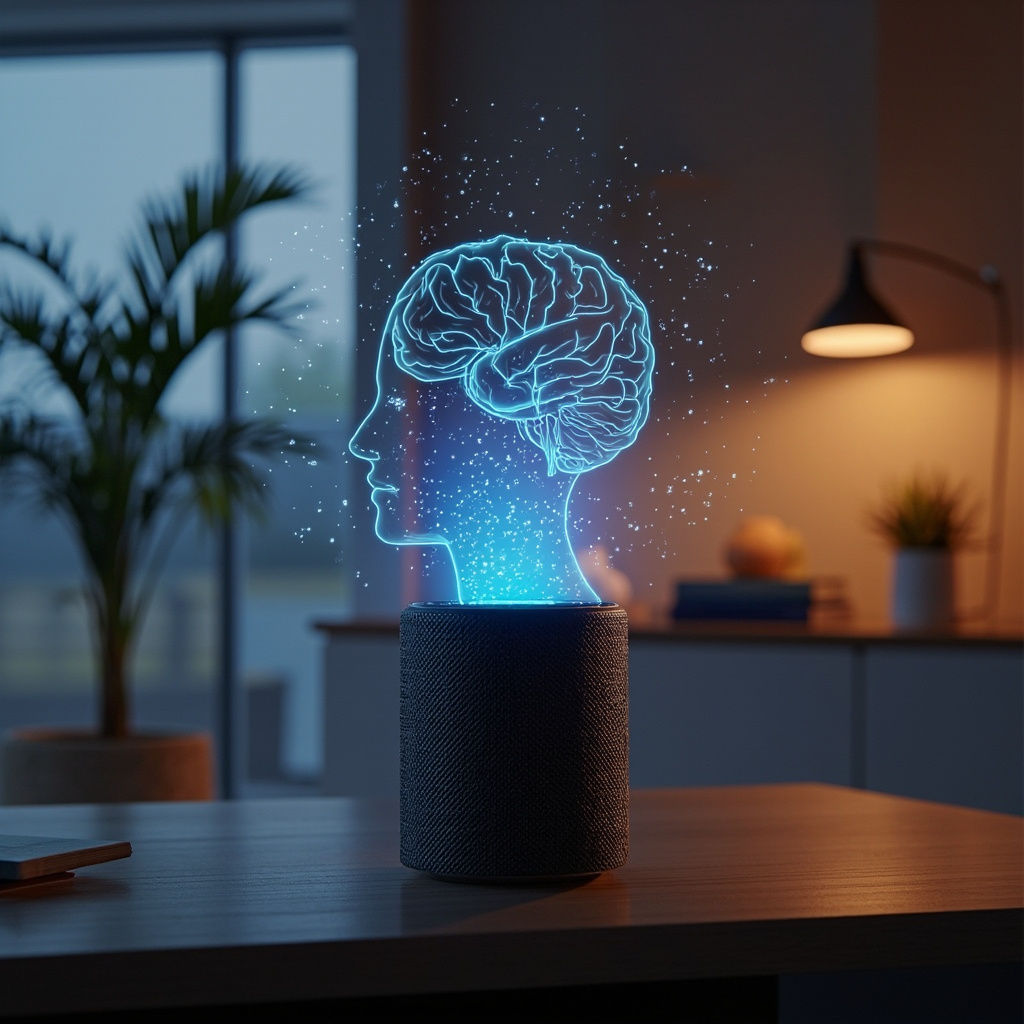
But the real game-changer is how these models have been integrated into our daily environments. Google’s Gemini 3 doesn’t just live in your phone – it’s becoming the brain behind smart home ecosystems, understanding not just what you say, but the context of where you are, what time it is, and what you typically do in different situations.
Voice That Sounds Human
The breakthrough in voice synthesis has been equally dramatic. ElevenLabs has pushed voice generation to near-perfect human quality, with their latest models capable of capturing subtle emotional nuances, regional accents, and even personality quirks. More importantly, they’ve solved the latency problem – conversations now flow as naturally as talking to a person.
This isn’t just about sounding better. When AI voices sound genuinely human, something psychological shifts. Users report feeling more comfortable sharing personal information, asking for help with sensitive topics, and treating their AI assistants as trusted advisors rather than just tools.
Personal AI That Actually Gets Personal
The February 2026 updates have introduced something unprecedented: AI assistants that develop genuine understanding of your preferences, habits, and communication style. These aren’t just chatbots with good memory – they’re systems that learn and adapt.
Take the new ChatGPT Voice improvements. The system now recognizes emotional context in your voice, adjusting its responses accordingly. Stressed about a deadline? It becomes more focused and actionable. Having a casual conversation? It matches your relaxed tone and maybe throws in some humor.

Meanwhile, Android users are experiencing Gemini’s integration as an upgraded Google Assistant that feels less like using a search engine and more like consulting with a knowledgeable friend. It understands follow-up questions, maintains conversation threads, and can switch seamlessly between helping with work tasks and casual chat.
The Smart Home Gets Smarter
Voice AI has finally delivered on the promise of the smart home. Instead of memorizing specific commands for different devices, you can now have natural conversations with your environment. “It’s getting cold and I’m working late” triggers not just temperature adjustment, but also lighting optimization for focus and maybe a gentle reminder about your usual evening routine.
The key breakthrough is contextual awareness. Your AI assistant knows if you’re alone or have guests, whether it’s a workday or weekend, and what you typically prefer in similar situations. This contextual intelligence transforms voice commands from rigid interactions into fluid conversations.
Real-World Applications That Matter
The practical applications extend far beyond convenience. Healthcare workers are using voice AI to update patient records while maintaining eye contact during consultations. Teachers are getting real-time assistance with lesson planning and student questions. Parents are using AI tutors that adapt their teaching style to each child’s learning preferences.
For people with disabilities, these advances represent genuine life improvements. Voice-controlled everything, from complex software to environmental controls, is becoming more reliable and intuitive. The technology is finally delivering on its promise of genuine accessibility.
Privacy and Personal Connection
Interestingly, as these AI systems become more capable and personal, developers have also improved privacy controls. Local processing for sensitive conversations, granular data controls, and transparent AI decision-making are becoming standard features rather than premium add-ons.
Users can now have truly private conversations with AI assistants, with sensitive discussions processed locally rather than sent to cloud servers. This privacy-first approach is building trust and encouraging more intimate, helpful interactions.
The Workplace Revolution
Professional environments are seeing the most dramatic changes. Voice AI isn’t just taking notes in meetings anymore – it’s actively participating. AI assistants can now summarize complex discussions, identify action items, schedule follow-ups, and even participate in brainstorming sessions by offering relevant information and alternative perspectives.
The latest Zoom AI Companion updates demonstrate this evolution. The system doesn’t just record and transcribe meetings – it understands meeting dynamics, tracks who needs to follow up on what, and can even facilitate discussions by suggesting agenda items based on previous conversations and current priorities.
Microsoft 365 Copilot has evolved into something that feels like having a knowledgeable colleague who never forgets anything and is always available. It can join voice calls, provide real-time research, suggest document improvements, and coordinate complex scheduling across teams – all through natural conversation.
What This Means for Daily Life
The transformation isn’t just technological – it’s deeply personal. People are developing relationships with AI assistants that feel genuine and meaningful. These aren’t just tools anymore; they’re becoming trusted advisors, creative collaborators, and even emotional support systems.
The key insight is that when AI becomes truly conversational, it stops feeling like you’re using technology and starts feeling like you’re engaging with intelligence. This shift changes everything about how we work, learn, create, and solve problems.
Voice AI in February 2026 represents more than incremental improvement – it’s the moment artificial intelligence became genuinely helpful in the way humans naturally communicate. The future isn’t about learning to talk to machines; it’s about machines learning to talk with us.
As these systems continue improving, the question isn’t whether voice AI will transform daily life – it’s how quickly you’ll adapt to having an intelligent conversation partner available whenever you need one. The technology is ready. The only question is whether you are.