Talk to Your PDFs: 5 AI Chat Tools That Transform How You Read Documents


Reading through long PDFs, research papers, and complex documents doesn’t have to be a slog anymore. AI chat tools now let you have actual conversations with your documents, asking questions and getting instant answers without scrolling through hundreds of pages.

Whether you’re a student tackling research papers, a professional reviewing contracts, or anyone dealing with lengthy documents daily, these AI PDF chat tools can save hours of manual reading time.
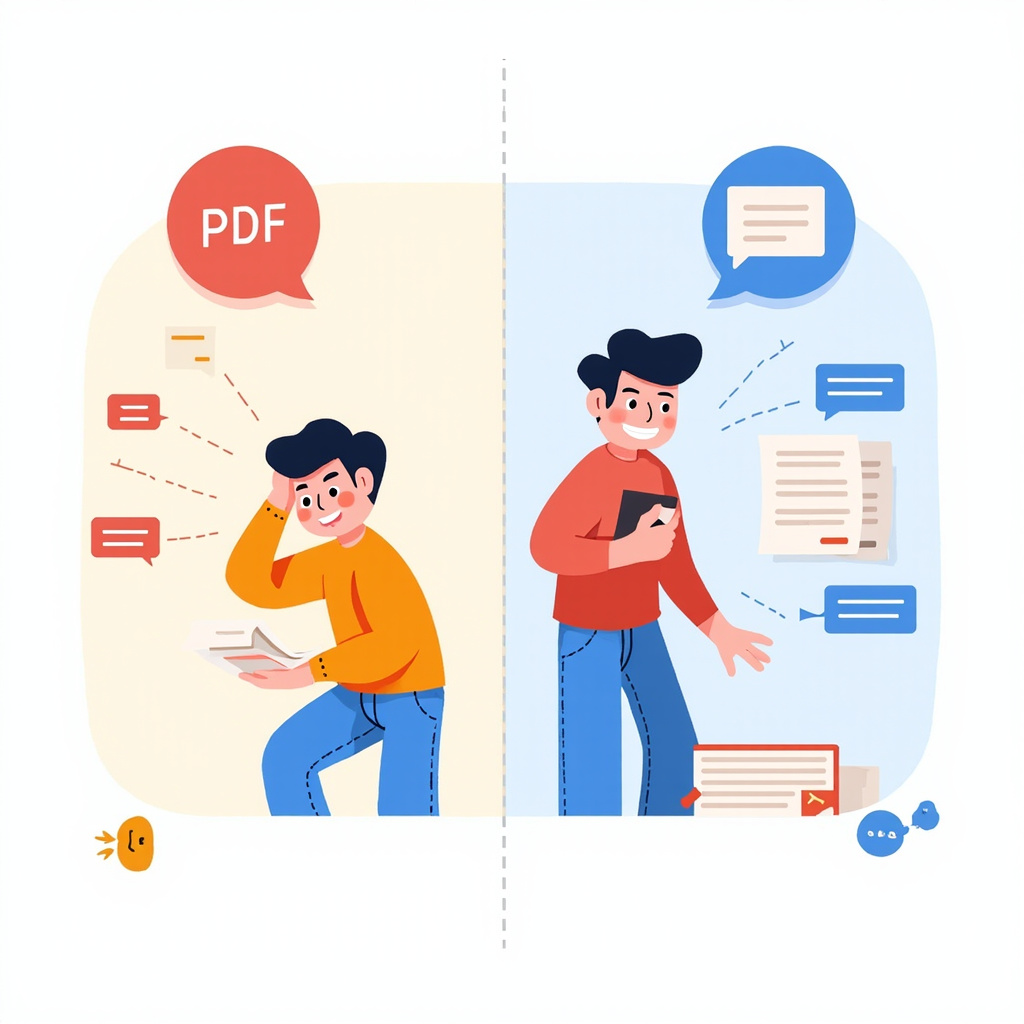
Traditional PDF reading vs AI chat interface comparison

Why AI PDF Chat Tools Matter

Traditional PDF reading forces you to manually scan through pages, trying to find specific information or understand complex concepts. AI chat tools flip this process: instead of you searching the document, you ask the AI specific questions and it finds the answers for you.

Key benefits include:

  • Instant answers: Get specific information without scrolling through pages
  • Smart summarization: Understand key points quickly
  • Cross-referencing: Ask about connections between different sections
  • Language simplification: Get complex concepts explained in plain English
  • Multi-document analysis: Compare information across multiple PDFs

Top 5 AI PDF Chat Tools for 2026

1. ChatPDF – The Original Pioneer

ChatPDF started the PDF conversation revolution and remains one of the most reliable options. Upload any PDF and immediately start asking questions about its content.

Best for: Academic research, quick document analysis
Free plan: 2 documents per day
Paid plan: Unlimited documents with ChatPDF Plus

2. PDF.ai – Enterprise-Grade Features

PDF.ai offers more advanced features including document comparison, batch processing, and detailed citation tracking. Perfect for professional use cases.

Best for: Business documents, legal contracts, technical manuals
Free plan: Limited queries per month
Pricing: Starts at $9/month for unlimited access

3. AskYourPDF – Multi-Format Support

Beyond PDFs, AskYourPDF handles Word documents, PowerPoint presentations, and even web pages. Great for users working with diverse document types.

Best for: Mixed document workflows, content creators
Free plan: 5 documents per day
Features: Browser extension, mobile app available
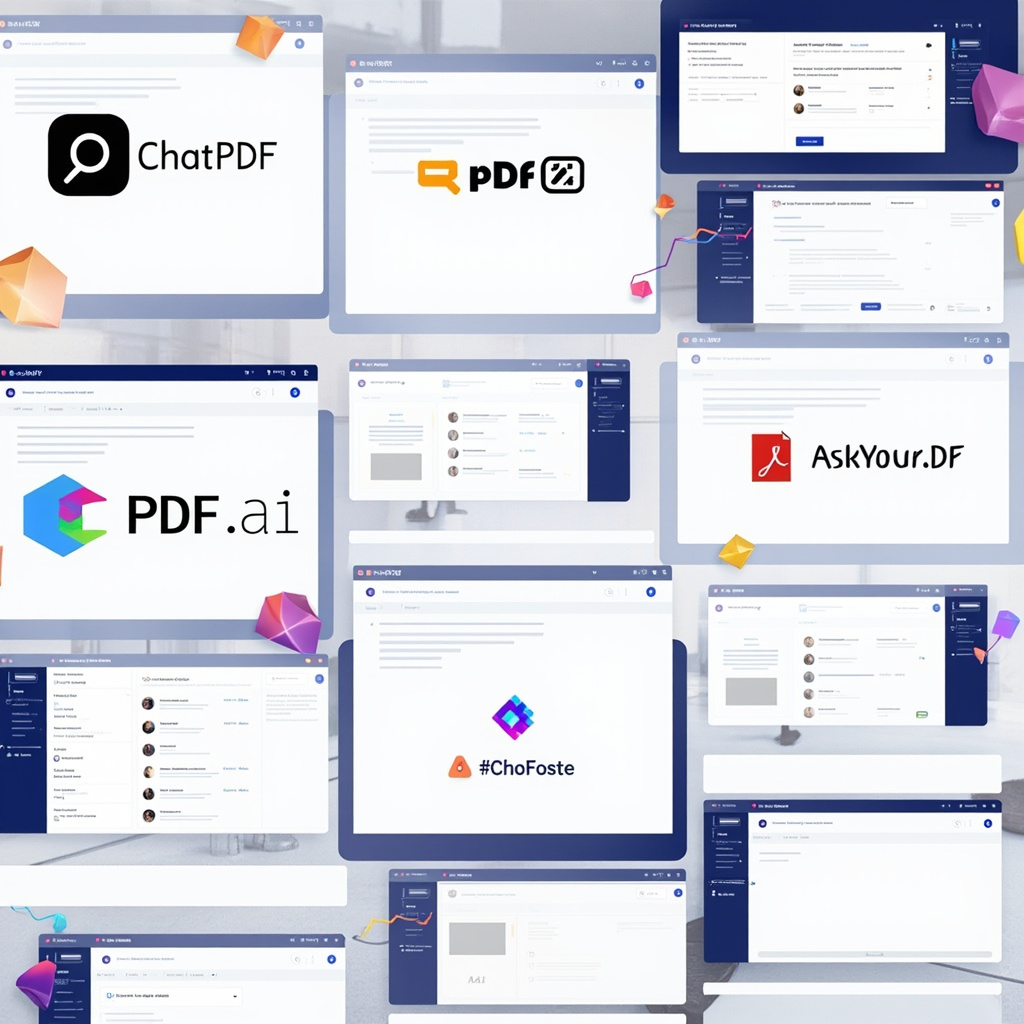
Collection of AI PDF chat tool interfaces

4. Smallpdf AI Chat – Swiss Precision

From the makers of the popular Smallpdf toolkit, this AI chat feature integrates seamlessly with their existing PDF editing and management tools.

Best for: Users already in the Smallpdf ecosystem
Free plan: Basic chat features included
Integration: Works with Smallpdf’s editing and conversion tools

5. Humata AI – Research-Focused

Specifically designed for researchers and academics, Humata AI excels at analyzing research papers, generating citations, and connecting ideas across multiple documents.

Best for: Academic research, literature reviews
Features: Citation generation, research summaries
Pricing: Free tier with usage limits, paid plans for heavy users

Choosing the Right Tool for You

Your best choice depends on your specific needs:

  • Students and researchers: ChatPDF or Humata AI for academic work
  • Business professionals: PDF.ai for advanced features and security
  • Casual users: AskYourPDF for its versatility and free tier
  • Existing Smallpdf users: Smallpdf AI Chat for seamless integration

Getting Started Tips

To get the most out of AI PDF chat tools:

  1. Start with specific questions: Instead of asking “What is this document about?”, try “What are the main conclusions about climate change impacts?”
  2. Use follow-up questions: Build on previous answers to dive deeper into topics
  3. Ask for summaries: Request bullet-point summaries of complex sections
  4. Cross-reference information: Ask the AI to find connections between different parts of the document
  5. Request clarification: If something isn’t clear, ask the AI to explain it in simpler terms

The Future of Document Reading

AI PDF chat tools represent a fundamental shift in how we interact with written information. Instead of passive reading, we can now have active conversations with our documents, making research and analysis more efficient and engaging.

As these tools continue improving with better AI models and more features, they’ll become essential for anyone who regularly works with documents. The question isn’t whether to adopt them, but which one fits your workflow best.

Try one of these tools with your next lengthy document – you might be surprised how much time you save and how much more you understand.


The Best AI Coding Assistants in 2026: Copilot, Cursor, Claude Code, and the New Contenders

AI coding assistants have gone from novelty to necessity. In 2026, the question isn’t whether to use one — it’s which one deserves a permanent spot in your workflow. After testing the major players on real projects, here’s our definitive guide.

Showcase of AI coding assistants including GitHub Copilot, Cursor, and Claude Code interfaces

The Big Three

GitHub Copilot: The Reliable Workhorse

GitHub Copilot remains the most widely adopted AI coding assistant, and for good reason. It works in virtually every IDE, supports dozens of languages, and its autocomplete suggestions have become remarkably accurate. The free tier now offers 12,000 completions per month — enough for most individual developers.

Copilot’s agent mode, introduced in late 2025, can now handle multi-step tasks like “add error handling to all API endpoints in this module.” It’s not as powerful as dedicated agentic tools, but it’s friction-free for existing GitHub users.

Best for: Developers who want solid AI assistance without leaving their current IDE or workflow.

Cursor: The AI-First Editor

Cursor has emerged as the editor of choice for developers who want maximum AI integration. Built as a fork of VS Code, it feels familiar but adds powerful AI capabilities that go far beyond autocomplete.

Cursor’s agent mode is genuinely impressive. It can navigate your codebase, make coordinated changes across files, run tests, and iterate until things work. The “Composer” feature lets you describe changes in natural language and watch Cursor implement them across your project.

The trade-off is that you need to switch editors. For many developers, VS Code extensions and configurations represent years of customization that’s painful to abandon.

Best for: Developers ready to go all-in on AI-assisted development and willing to switch editors.

Claude Code: The Terminal-Native Agent

Anthropic’s Claude Code takes a radically different approach — it lives in your terminal, not your editor. You describe what you want in plain English, and Claude Code reads your files, makes changes, runs commands, and iterates.

For complex refactoring, bug investigation, and architectural changes, Claude Code is extraordinarily capable. It leverages Claude Opus 4’s reasoning abilities to tackle problems that stump other tools.

Best for: Senior developers who prefer command-line workflows and tackle complex, multi-file tasks.

The Rising Contenders

Sourcegraph Cody: The Codebase Expert

Cody’s superpower is codebase understanding. Powered by Sourcegraph’s code search and intelligence platform, it genuinely understands your entire codebase — not just the files you have open. For large monorepos and complex enterprise codebases, this contextual awareness is a major advantage.

Aider: The Open-Source Champion

Aider deserves special mention as the best open-source AI coding assistant. It works with multiple LLM backends (Claude, GPT, local models), lives in your terminal, and handles pair-programming style interactions beautifully. If you want AI coding assistance without vendor lock-in, Aider is the answer.

Windsurf (formerly Codeium): The Smart Autocomplete

Windsurf focuses on making autocomplete smarter rather than adding agentic capabilities. Its “Cascade” feature provides contextually aware completions that consider your entire project. The free tier is generous, making it an excellent choice for students and hobbyists.

Zed: Speed Meets AI

Zed, the performance-focused editor written in Rust, has added compelling AI features. If editor speed is your priority and you want solid AI integration, Zed is worth a look — especially for large projects where VS Code starts to lag.

Developer evaluating and choosing between different AI coding assistant tools

How to Choose

The decision comes down to your priorities:

  • Staying in your IDE: GitHub Copilot. It works everywhere with minimal setup.
  • Maximum AI power: Cursor. Its agent mode is the most capable editor-integrated experience.
  • Terminal-first workflow: Claude Code or Aider. Both excel at complex, multi-step tasks.
  • Large codebase understanding: Cody. Sourcegraph’s search gives it an edge no one else has.
  • Budget-conscious: Copilot Free (12K completions/month) or Windsurf’s free tier.

Many developers are finding that the best approach is to combine tools: Copilot for daily autocomplete, plus Cursor or Claude Code for complex tasks. The tools complement rather than compete.

Whatever you choose, the productivity gains from AI-assisted coding in 2026 are real and substantial. Developers report 30-50% faster completion of routine tasks, with the biggest gains in boilerplate generation, test writing, and documentation. The key is finding the tool that fits your workflow rather than forcing your workflow to fit the tool.

For a deeper look at the underlying models powering these tools, check out our comparison of Claude, GPT-4o, and Gemini. And if you’re interested in how AI can help with the review side, see our guide to AI-powered code review tools.