Claude Is Now Inside Google Gemini: What It Means When Your Assistant Lets You Pick a Rival’s Brain


Google just did something it had never done in Gemini: it put a direct competitor’s AI right in the menu. At its Gemini at Work 2026 event, Google unveiled a new universal “agent for work” — and sitting in the model picker, directly beneath Google’s brand-new Gemini 4 Argon, were two models from Anthropic: Claude Opus 5 and Claude Sonnet 5.5. For a product that has only ever run Google’s own models, that is a genuinely surprising move.
Here’s what actually changed, the simple distinction that makes it possible, who can use it right now, and the one question worth asking before you let Gemini pick a model for you.

What actually happened
Google Cloud CEO Thomas Kurian introduced Gemini as “a single, universal agent for work” — one prompt box that can answer questions, do knowledge work, write documents and run code, reaching across apps like Gmail, Slack, Salesforce and Microsoft 365. The headline feature for our purposes is the model picker. During the launch it showed five options: Auto (Google’s default, which picks a model per task), Gemini 4 Argon (Google’s new top reasoning model), Gemini 3.8 Flash (Google’s fast, cheaper option), and then Claude Opus 5 and Claude Sonnet 5.5 from Anthropic. Google says it “orchestrates across our Gemini family of models and Claude models from Anthropic today,” with other private and open-source models coming later.
Model versus agent — the distinction that makes this work
The line that matters most came from Kurian himself: “Gemini is the agent, and the model underneath it is a separate choice.” That sentence is worth unpacking, because it is the idea behind this whole shift.
Think of it as a car. The model is the engine — the AI “brain” that reads your request and writes the answer. The agent is everything built around it: the memory of your past work, the tools, the app connections, the permissions. Google is saying you can keep the Gemini agent you’ve set up and simply swap the engine underneath. That is a different mental model from how most people think about AI assistants, where the brand and the brain are the same thing.

Why this is a genuine first
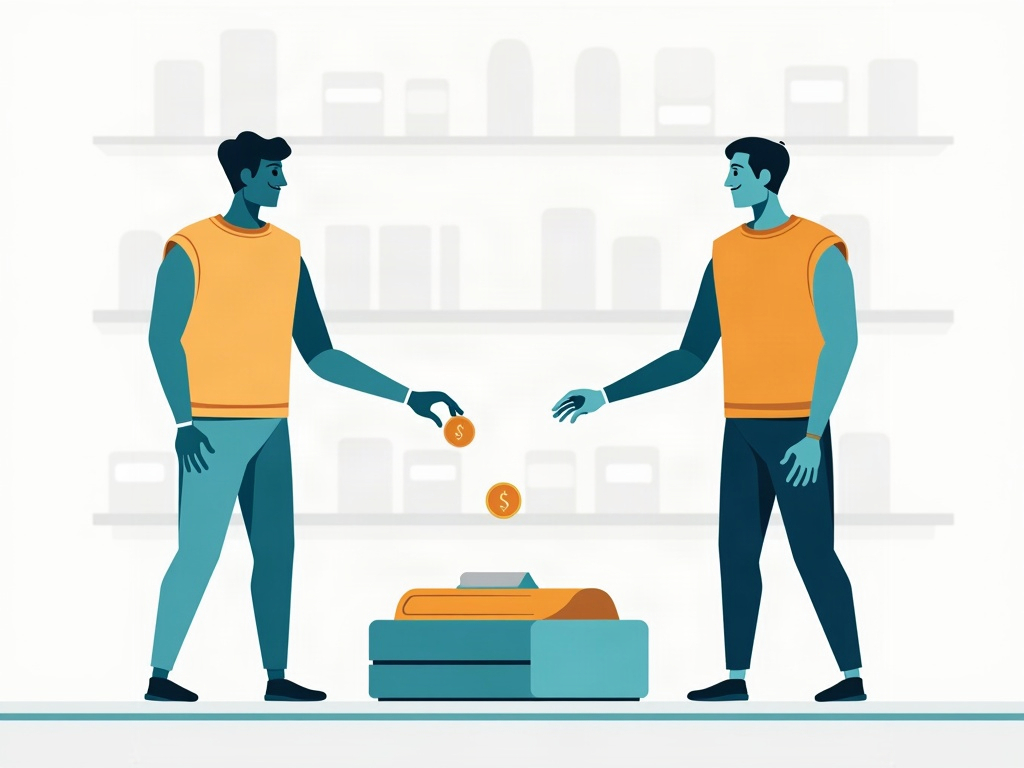
Claude has technically been available on Google’s cloud for a while — but only to developers building their own apps on Google’s platform, out of sight of ordinary users. This is different. Gemini is Google’s flagship AI product, the one with more than a billion monthly users, and until now it ran nothing but Google’s own models. Seeing Claude listed inside it is the equivalent of a store putting a rival brand on its front shelf instead of hiding it in the warehouse.
Google isn’t the pioneer here. Microsoft added Anthropic’s models to Microsoft 365 Copilot back in 2025. The notable holdout is OpenAI: ChatGPT still runs only OpenAI models, a bet that its own model is all you’ll ever need. The rest of the industry is drifting toward letting you mix and match — which is the same reasoning behind choosing the right model for each job rather than loyally using one for everything.
Why would Google sell a rival’s AI?
It looks strange until you follow the money. Earlier in 2026 Google agreed to invest heavily in Anthropic — a stake reported to run as high as $40 billion. When you own a meaningful piece of the competitor, offering their model inside your product isn’t charity; you benefit whichever one the customer picks. There’s also a straightforward competitive logic: if businesses want Claude, Google would rather sell it to them inside Gemini than watch them leave for a rival platform entirely. “Model choice” becomes a feature that keeps you in Google’s ecosystem.
Can you actually use this today?
Here’s the honest part, because the headlines can oversell it. This is Gemini for work — the enterprise agent, not the free Gemini app on your phone. In practice an administrator has to switch it on: Google’s documentation describes enabling Anthropic’s Claude Opus 5.5 and Claude Sonnet 5.5 in the “third-party models” section of the enterprise admin settings before employees see them in the picker. So if your company runs Gemini Enterprise, ask whoever manages it whether Claude is turned on.
If you’re a developer, you can already mix models today in Google’s builder tooling, where Claude Sonnet and Opus appear alongside Gemini as selectable options. And for everyone else, the direction of travel is clear: model-switching that started in enterprise tools has a habit of arriving in consumer apps later. It’s the same pattern we saw as Google rolled its new flagship outward — worth a look if you haven’t tried what Gemini 4 Argon can actually do yet.

The one question to ask before you trust “Auto”
The default setting, Auto, quietly routes each request to whichever model Google thinks fits best — sometimes Gemini, sometimes Claude. That’s convenient, and often it’s the smart call, the same way a cheaper, faster model is frequently the better pick for routine work, as the latest budget models keeping pace with the big labs keep demonstrating. But convenience has a flip side worth a moment’s thought: which model handled your request, and where did your data go?
When Auto hands a prompt to a third-party model, your text is being processed by a different company’s system than the logo on the app suggests. For casual questions that’s a non-issue. For anything sensitive — client details, confidential documents, regulated data — it’s reasonable to want to know, and often to pin the model yourself rather than leave it to Auto. The good news is that the picker gives you that control; the practical habit is simply to use it when it matters.

The bigger story here isn’t one menu. It’s that the AI you use is splitting into two parts — the assistant you live in, and the interchangeable brain behind it — and the companies building these tools are increasingly letting you choose the brain. That’s good news: competition on the model layer means better answers and lower prices for you. You don’t have to switch anything today. But the next time your assistant offers you a choice of models, take it seriously — picking the right brain for the task is quietly becoming one of the most useful AI skills you can have.
Sources & further reading:
- Google Just Put Claude Inside Gemini — Memeburn
- Gemini Enterprise release notes (enable third-party Anthropic models) — Google Cloud
- Anthropic’s Claude on Google Cloud models — Google Cloud Documentation
Related Reading
- Claude Opus 4 vs GPT-4o vs Gemini 2.5 Pro: Which AI Model Should Developers Choose in 2026?
- Gemini Spark: Google’s New 24/7 Personal AI Agent — What It Does and How to Use It
- Google Just Dropped Three New Gemini Models — Here’s Which One You Should Actually Use