7 AI Agents That Actually Work for You While You Sleep (Not Just Chatbots)


The AI revolution everyone’s talking about isn’t ChatGPT anymore. It’s the emergence of AI agents that actually do work for you—not just answer questions, but execute complex tasks while you focus on what matters most. These aren’t simple chatbots; they’re digital employees that never sleep, never take breaks, and never forget what you asked them to do.
While most people are still stuck thinking of AI as glorified search engines, a new generation of autonomous agents is quietly transforming how work gets done. These tools move beyond conversation to take real action in your digital environment.
What Makes AI Agents Different from Chatbots
Traditional AI tools respond to prompts. AI agents plan, execute, and iterate. They can:
- Access multiple systems and applications independently
- Learn from previous interactions and outcomes
- Make decisions based on changing conditions
- Execute multi-step workflows without supervision
- Integrate with existing tools and platforms seamlessly
The key difference? Chatbots are reactive; agents are proactive. They work while you sleep, handling routine tasks that would otherwise consume hours of your day.
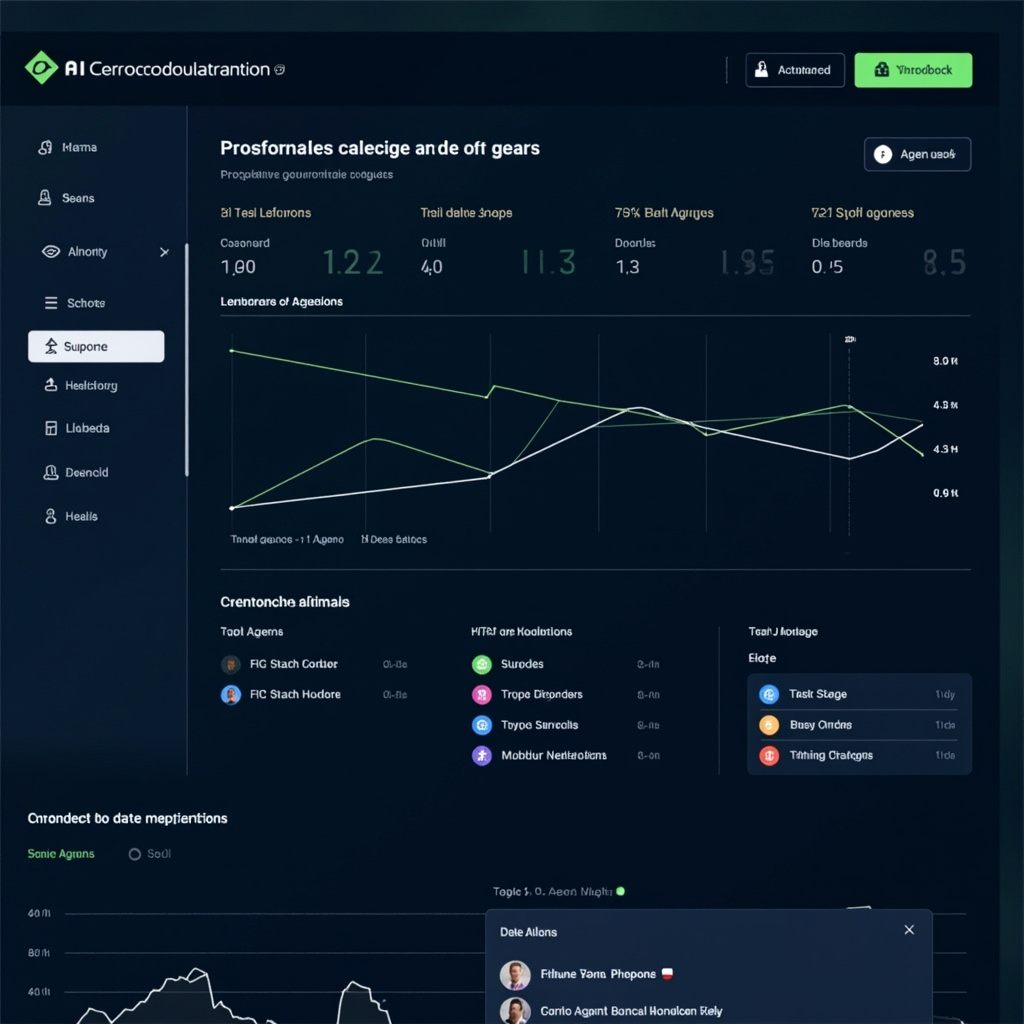
7 AI Agents That Actually Work
1. Zapier Central – The Workflow Orchestrator
Zapier has evolved from simple automation to AI-powered workflow reasoning. Central can understand complex business logic and create multi-step automations that adapt based on outcomes. It connects over 6,000 apps and can handle conditional logic that would take hours to program manually.
2. Anthropic Claude for Enterprise – The Document Processor
Claude’s latest enterprise features include autonomous document processing, contract analysis, and compliance checking. It can review hundreds of legal documents, flag issues, and generate summaries while you’re away from your desk.
3. Microsoft Power Platform AI Builder – The Data Analyst
This agent monitors your business data continuously, identifies trends, and can automatically generate reports, send alerts, and even trigger business processes based on data patterns it discovers.
4. Runway AI Studio – The Content Creator
Beyond video editing, Runway’s AI agents can monitor your content pipeline, suggest optimizations, and even generate variations of successful content automatically. It learns your brand voice and visual style.
5. Linear’s AI Project Manager
This agent tracks project progress, identifies bottlenecks, and can automatically reassign tasks, update timelines, and notify stakeholders based on real-time project data.
6. Raycast AI – The System Integrator
Raycast goes beyond simple commands to become a true AI assistant for your entire digital workspace. It can coordinate actions across apps, manage your calendar based on priorities, and optimize your daily workflow automatically.
7. Custom OpenAI Assistants – The Specialists
Using OpenAI’s Assistants API, businesses are creating highly specialized agents that handle industry-specific tasks—from medical coding to financial analysis—with domain expertise that surpasses many human specialists.
Real-World Results
Marketing agency TechFlow Solutions implemented three AI agents and saw remarkable results:
- Administrative time reduced by 73% – Agents handle client onboarding, contract processing, and project setup
- Response time improved to under 2 minutes – Agents monitor client communications 24/7
- Revenue increased 31% – Team focuses on strategy while agents handle execution
“It’s like hiring a team of incredibly capable assistants who never need training updates,” reports Sarah Chen, Operations Director. “They just keep getting better at understanding our business.”
The Integration Challenge
The biggest hurdle isn’t capability—it’s integration. The most successful AI agent implementations share common characteristics:
Clear Boundaries
Define exactly what agents can and cannot do. Successful implementations start narrow and expand gradually as trust builds.
Robust Monitoring
Agents need oversight systems. The best deployments include automated quality checks and human review processes for critical decisions.
Gradual Rollout
Start with low-risk, high-volume tasks. Email sorting and data entry are perfect first steps. Complex decision-making comes later.
What to Avoid
Common mistakes that derail AI agent projects:
- Trying to automate everything at once – Start with one workflow and perfect it
- Insufficient training data – Agents need examples to understand your standards
- No feedback loops – Without monitoring, agents can drift from intended behavior
- Ignoring edge cases – Plan for unusual scenarios that might confuse agents
The Future is Already Here
We’re witnessing the transition from AI as a tool to AI as a workforce. These agents aren’t replacing humans—they’re handling the tasks that humans shouldn’t have to do manually.
The companies embracing AI agents now are building operational advantages that will be difficult for competitors to match. While others debate whether AI is ready for business use, early adopters are already seeing results.
The question isn’t whether AI agents will transform work—it’s whether you’ll be leading the transformation or scrambling to catch up.
Start small, think big, and remember: the best AI agent is the one that makes you forget it’s working for you. When your digital assistant becomes invisible, that’s when you know you’ve got it right.